 Posted by
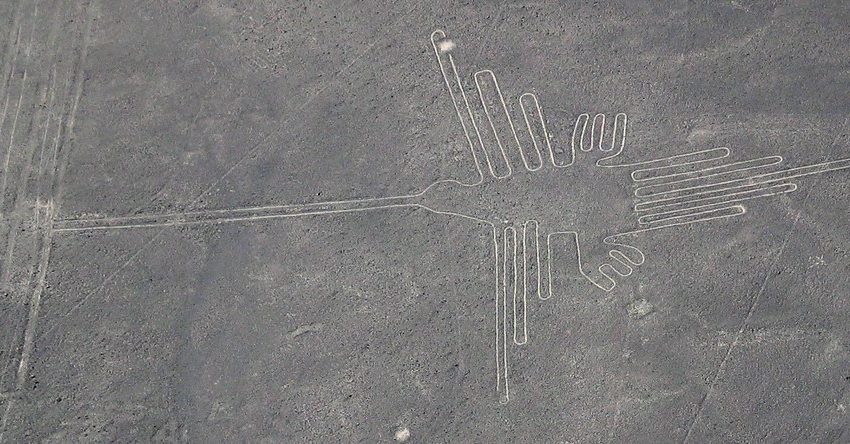
 In the heart of the Peruvian desert, about 400 kilometers from Lima, lies one of the greatest enigmas of archaeology: the Nazca Lines. Gigantic geoglyphs traced on the ground between 500 BC and 500 AD depict animals, plants, geometric figures, and even a mysterious humanoid silhouette nicknamed “the astronaut.”
These works, visible only from above, raise questions that remain unanswered: Why were they created? How did an ancient civilization draw such immense shapes with such precision without being able to observe them from above? And, above all, who or what were these signs meant to see?
Declared a UNESCO World Heritage Site in 1994, the Nazca Lines continue to divide scholars, archaeologists, and mystery enthusiasts. Some consider them a giant astronomical calendar, others a message to celestial deities, and some even hypothesize a link to extraterrestrial civilizations.
In this article, we will explore the history of their discovery and their most surprising features, the most fascinating theories about their origin, what the latest scientific research says, how to visit them today, and why their preservation is a crucial challenge.
Ready to immerse yourself in one of the greatest mysteries of the ancient world? Let’s begin the journey.
The discovery of the Nazca Lines

For centuries, the Nazca Lines remained hidden from view, guarded by the vast silence of the Peruvian desert. It was only with the advent of modern aviation that this hidden masterpiece was finally revealed. In the 1920s, the first commercial pilots noticed strange marks on the ground, but it was the American archaeologist Maria Reiche who dedicated her life to studying these enigmatic figures from the 1940s onwards.
With her trusty bucket and broom, Reiche meticulously cleaned the lines, measured them, and documented every detail, earning herself the nickname “Lady of Nazca.” Her research revealed astonishing mathematical precision: many lines are perfectly straight for miles, despite the uneven terrain, and the figures maintain impeccable proportions despite their colossal size.
But the mystery deepens when we consider how they were created. The ancient inhabitants of Nazca had no balloons or technology to observe their work from above. Yet, using simple tools and geometric calculations, they managed to draw figures that only retain their perfection when viewed from hundreds of meters above.
Some theories suggest that the creators of the lines used stakes and ropes to trace the designs, while other hypotheses propose that they developed a primitive form of “projection” to transfer images on a large scale. But no explanation has yet fully clarified how they achieved such precision without ever being able to see the complete work.
This section of our journey leaves us with an even deeper question: if the Nazca Lines were not meant to be seen by those who created them, who were they intended for?
The Enigmatic “Astronaut” of Nazca
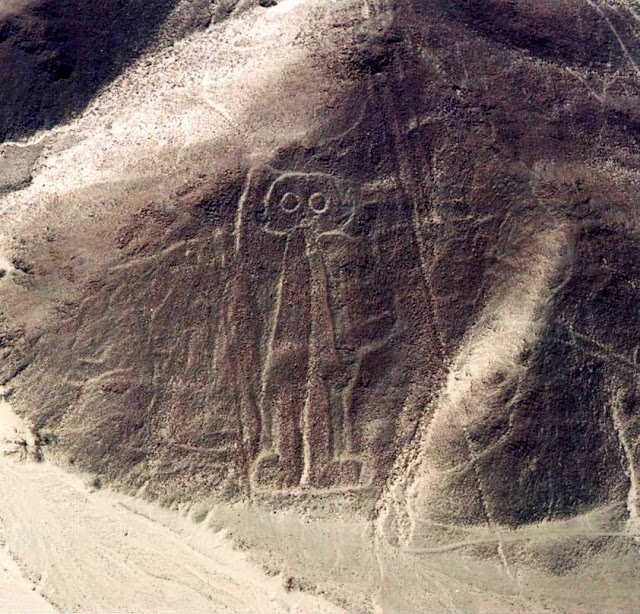
Among the hundreds of geoglyphs that crisscross the Peruvian desert, one stands out for its aura of mystery: the figure known as “the Astronaut.” Standing about 30 meters high and carved into the slope of a hill, this strange silhouette shows a being with an oval head, large eyes, and what appears to be an arm raised in a gesture of greeting. Its unnatural posture and almost “extraterrestrial” appearance have fueled imaginative theories, so much so that some consider it proof of ancient contact with alien civilizations.
In reality, archaeologists offer more down-to-earth explanations: it could represent a shaman in a trance, a deity linked to the cult of water, or a stylized fish, a symbol of fertility. Its isolated position, different from the other flat figures, perhaps suggests a particular ritual meaning.
Theories and interpretations
Since the Nazca Lines were discovered, scholars, archaeologists, and enthusiasts have put forward the most daring hypotheses to explain their meaning. Each theory offers a different lens through which to view this enigma, but none has been able to provide a definitive answer.
Among the first and most widely accepted interpretations is that of Maria Reiche, who claimed that they were a giant astronomical calendar. According to her analysis, many of the lines aligned perfectly with solstices, equinoxes, and celestial bodies, suggesting that the Nazca people had developed sophisticated astronomical knowledge. However, subsequent studies have shown that only some of the lines actually correspond to celestial phenomena, leaving the debate open.
Another fascinating theory is that proposed by anthropologist Tony Morrison, who believed that the lines were ceremonial paths linked to water worship. In an arid region such as Nazca, where survival depended on rain, it is possible that these tracks were part of rituals to invoke the benevolence of the gods. Some figures, such as the spider or the snake, are in fact associated with water deities in many Andean cultures.
But it was with the advent of the modern era that theories became more imaginative. In the 1960s, writer Erich von Däniken put forward the most controversial hypothesis: the Nazca Lines were landing strips or messages intended for extraterrestrial visitors. Although this idea captured the popular imagination, it has no scientific basis and is considered by the academic community to be pure speculation.
More recently, researchers such as Johan Reinhard have proposed a more holistic view, suggesting that the lines had multiple functions: sacred maps, ritual paths, and symbols of cultural identity. This theory recognizes the complexity of the Nazca civilization, which probably attributed a multifaceted meaning to these designs, linked to both spirituality and social organization.
While the debate continues, one thing is certain: the Nazca Lines were not simply “drawings in the desert.” They were a visual language, a bridge between earth and sky, between human and divine. But what message did they want to convey? Perhaps the answer is not in the stars, nor in fanciful hypotheses, but in a deeper understanding of a civilization that chose to speak through time, leaving indelible marks on the sands of mystery.
Technology and new discoveries
In the 21st century, archaeology no longer relies solely on shovels and pickaxes. Today, drones, satellites, and 3D scanning are revolutionizing the study of the Nazca Lines, offering new perspectives on this ancient mystery.
One of the most significant advances comes from the Nazca Project, an international initiative that uses high-resolution aerial photography and advanced mapping software. These technologies have revealed details invisible to the naked eye: micro-grooves, imperceptible alignments, and even new, previously unknown figures. In 2019, artificial intelligence identified over 140 additional geoglyphs, including strange anthropomorphic beings and hybrid creatures that could rewrite our understanding of Nazca culture.
But perhaps the most intriguing breakthrough comes from LIDAR (Light Detection and Ranging), a laser technology that penetrates the ground without the need for excavation. Recent scans have identified underground structures near the main lines, possibly ancient cisterns or ceremonial sites, suggesting that the geoglyphs were part of a complex water and religious system.
However, there are plenty of paradoxes. While technology discovers new lines, others disappear due to erosion and human activity. This technological chapter has not yet provided definitive answers, but it is transforming our approach. The Nazca Lines no longer appear as a static message, but as a dynamic system that may have changed over time, following astronomical cycles or cultural needs.
As satellites continue to scan the desert, one question remains: are we finally deciphering the code of an ancient civilization, or simply adding new layers to the mystery?
The challenge of conservation
The Peruvian government has responded with drastic measures. Since 1994, regulated flyovers and observation platforms have allowed visitors to admire the figures without trampling the fragile ground. In 2017, after a truck driver irreparably damaged three geoglyphs, prison sentences were introduced for anyone violating the protected area. But the battle is uneven: 450 km² of desert cannot be monitored meter by meter.
Technology is coming to the rescue once again. Archaeologists and activists are creating a comprehensive digital archive through photogrammetry and 3D scanning, preserving every detail in case the worst should happen. Meanwhile, researchers are experimenting with innovative conservation techniques, including bacteria that could strengthen the soil without altering its composition.
This global effort reveals a profound truth: the Nazca Lines no longer belong only to Peru, but to all of humanity. They are a map of our collective past and a testament to human creativity. Perhaps their ultimate message is this: in the race to decipher an ancient enigma, we are learning to take care of our shared history.
As we conclude this journey through dust and mystery, one question remains: a thousand years from now, when our descendants look back, what traces will we leave behind that are worth preserving?
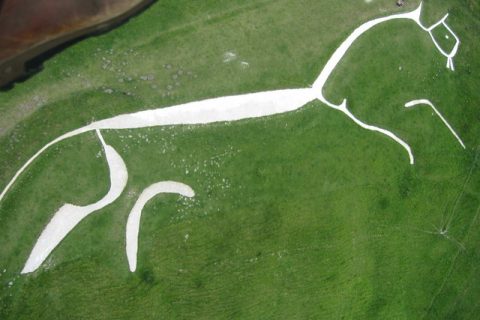
The Nazca lines are certainly the most famous, but there are also other lines visible from above, such as the White Horse of Uffington, the Long Man of Wilmington, the Cerne Abbas Giant, and the Sajama lines.