
 Posted by
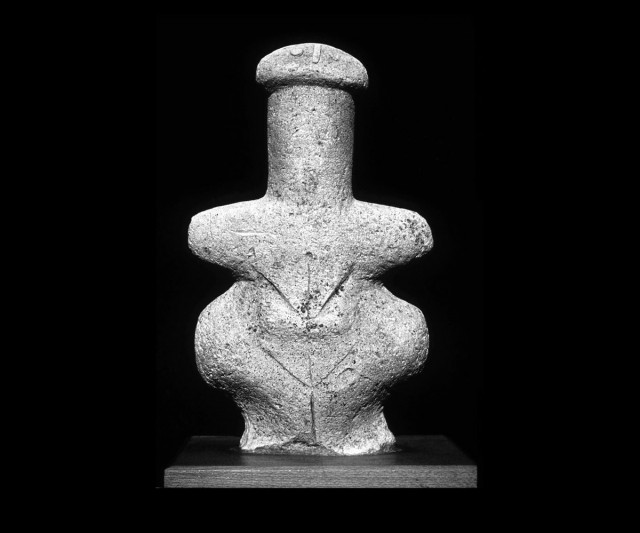
 The Lady of Lemb, or statue of the goddess of Death, is one of the oldest known cursed objects. It is a statue dating back approximately 5,500 years and is said to carry a terrible curse.
But is this really the case?
This is the article I wrote back in 2015, 10 years ago!
The statue of the goddess of death
The statue, carved from a single piece of limestone, was found in Lemb, Cyprus, in 1878. It is thought to represent fertility and has been dated to around 3,500 BC.
Its first owner was the noble Lord Elphont, and this is where the trail of deaths begins. After purchasing the statue, not only did Lord Elphont die, but in the following six years, all seven members of his family also died in strange circumstances.
The second owner was Ivor Menucci, who suffered the same fate: in the following four years, both he and all the members of his family died.
The third owner was Lord Thompson-Noel, who also died, followed in his sad fate by his family over the next four years.
The statue was temporarily lost, but reappeared a few decades later. Sir Alan Biverbrook bought it, unaware of its evil potential, and so he too died.
Within two years, his wife and two daughters also died, as had happened to the previous owners of the statue. The two surviving sons decided to donate the statue to the Royal Scottish Museum in Edinburgh, Scotland, hoping to put an end to the chain of deaths.
Unfortunately, before the strange deaths could be stopped, the Lady of Lemb wanted one last victim, who was the director of the museum.
If you want to see it, it is still on display in the museum in Edinburgh.
The following is an update from 2025.
What is really the Lady of Lemba?
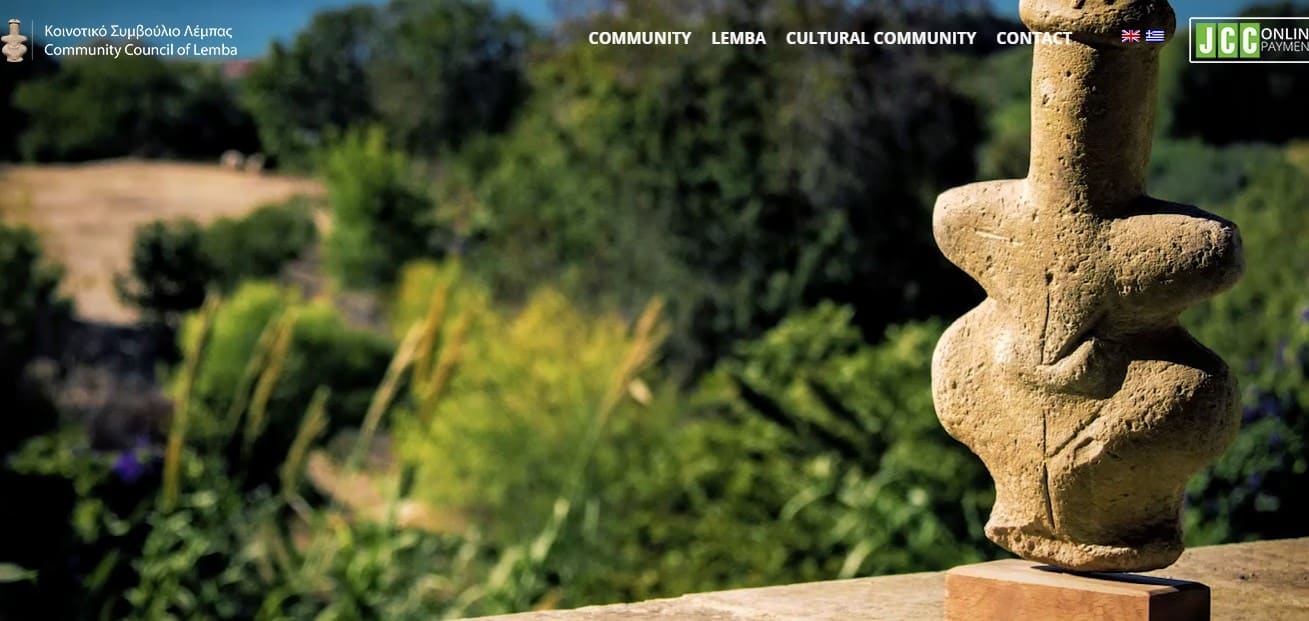
Let’s start with the name: the statue is known as the Lady of Lemba, with a final “a” (or Lempa). It was discovered in the 1970s, not at the end of the 19th century, by archaeologist Edgar Peltenburg of the University of Edinburgh, who, incidentally, lived quietly for 40 years after the discovery. Today, it is on display at the Cyprus Museum in Nicosia and not in Scotland.
While it is described online as a cursed statue and bringer of death, it is well known in Cyprus: it is reproduced in jewelry and souvenirs and is even used as the logo for the Lemba community website.
The elusive owners affected by the curse, Lord Elphont, Ivor Menucci, and Lord Thompson-Noel, never actually existed, nor did Sir Alan Biverbrook, who allegedly donated the statue to the Edinburgh museum to put an end to the curse.
The Lemba community was very surprised to discover that this statue, a symbol of the community, has such a sinister reputation. This is also because the artifact represents birth and not death, as stated by Thoukidides Chrysostomou, president of the Lemba City Council.
So why does everyone talk about it as if it were a cursed object? Well, it’s simple: an ancient artifact, supernatural details, and little available information are fertile ground for fantasy and viral content.