 Posted by
 Werewolves are among the most famous creatures in the legends and folklore of almost all civilizations, since ancient times.
Some legends describe the werewolf as a person who has been cursed, while according to others this characteristic is innate. However, a distinction must be made between werewolves and lycanthropes, which, according to some legends, are not always synonymous.
In fact, while the werewolf is just a man-eating wolf, perhaps described as monstrous, the lycanthrope (from the Greek lykos = wolf and antropos = man) is a person who transforms into a wolf at will. In legends in which a werewolf is also subject to transformation, this is, unlike the lycanthrope, involuntary.
Lycanthropy as a disease
With the advancement of science, medicine, and psychology, man has come to the conclusion that lycanthropy is a mental illness.
A kind of hysteria that caused those affected to behave strangely on special occasions, such as full moon nights.
Today, lycanthropy as a mental illness is being questioned.
In 1985, more in-depth studies led David Dolphin to discover a disease called porphyria, which causes an alteration in one of the enzymes that synthesize the heme group in the blood.
Symptoms include sensitivity to light, red urine, and in some cases hypertrichosis.
This may explain the legends about werewolves, since, as was often the case, what was not understood was explained by myths and legends.
Legend
Returning to the legends, the werewolf is a man who can transform himself into a wolf at will or involuntarily during full moon nights.
If he bites another person without killing them, they too will become a werewolf. If a werewolf is wounded while in wolf form, the wound will remain in the same place even after he has transformed back into a human.
The only way to defeat these creatures is to stab them with a silver knife or shoot them with silver bullets.
Famous werewolves
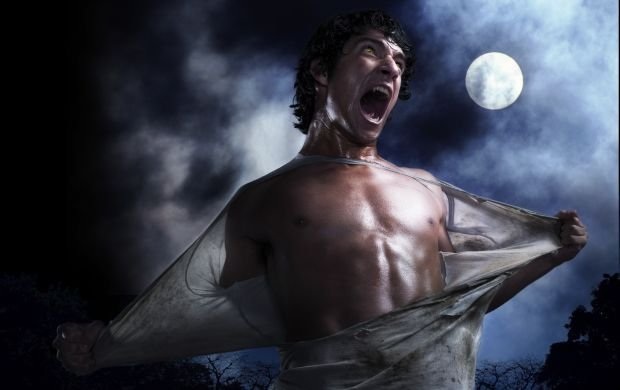
Throughout history, there have been various accounts of werewolves, especially during the 17th century, and I will give you a few examples.
In 1521 in France, Michel Verdun was accused of being a werewolf after a man was attacked by a wolf and managed to wound it. Shortly afterwards, the victim saw a man with the same wound inflicted on the animal: this man was Michel Verdun. He was tried and confessed to being a werewolf and named another man who had the same powers, Pierre Bourgot. Both confessed to killing children in the guise of wolves.
In 1589, Pete Stubbe, in Germany, confessed to killing two pregnant women and several children, including some of his own. Charged and put on trial, after various tortures, he confessed to being in possession of a belt given to him by the Devil that allowed him to transform into a werewolf. He was tortured, killed, and beheaded.
An entirely Italian story, on the other hand, is that of the “fiera bestia” (wild beast) that roamed the city of Milan in 1792. Some newspapers reported the disappearance of children in Milan and “a wild beast” was held responsible. The stories described it as a monstrous wolf with supernatural strength and speed. One day, a wolf was captured and the gruesome deaths ceased.
Most stories about werewolves come from France, and these legends may be the origin of the fairy tale “Little Red Riding Hood” written in 1697 by Perrault.