 Posted by
 I decided to start this blog with one of the stories that fascinated me most as a child: the green children of Woolpit.
The discovery of the green children of Woolpit
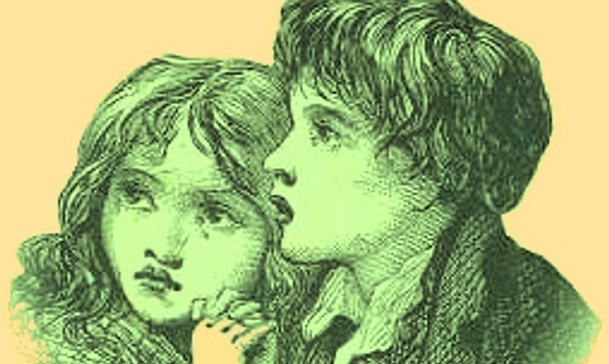
The tale of these mysterious children comes from Ralph of Coggeshall, a 12th-century monk and chronicler who, in 1189, wrote about a strange discovery in the village of Woolpit, Suffolk. On the outskirts of the village, there were pits dug into the ground—traditionally used as wolf traps. But in one of these pits, instead of wolves, two children were found: a boy and a girl. The peculiar thing? Their skin was green.
They were taken in by a local knight, Sir Richard de Calne, who tried to learn more about their origins. However, this proved impossible because the children spoke an unknown language and didn’t understand English.
At first, they refused to eat—until they saw green beans, which became their only food for a long time. Gradually, they began trying other foods, and after about a month, they were eating normally. As their diet changed, their green skin faded. Sadly, the boy died shortly afterward, but the girl survived, learned English, and eventually told her story.
The girl’s story
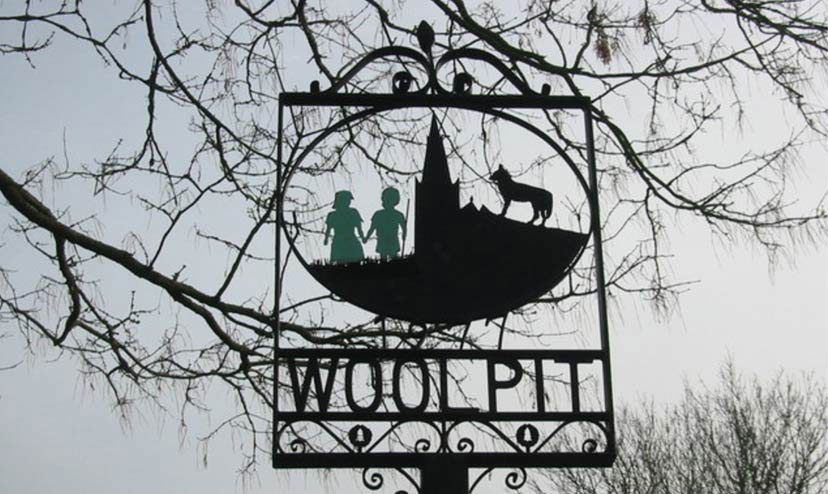
In a first version, the girl told that she and her brother were the children of a shepherd. While tending their flock, they were suddenly caught in a whirlwind that carried them to Woolpit.
She later changed her account and said that she and her brother arrived in the city through a tunnel, following the sound of bells. She described coming from the land of “San Martino”, where an eternal twilight had turned the villager’s skin green.
The girl grew up in Woolpit, working in the house of the knight who had taken her in as a child. Historical records of the time don’t mention her name, however, the writer Duncan Lunan claims to have found documents that show that her name was Agnes and that she later married a man called Richard Barre.
Though the mystery was never solved, here are some theories:
- Malnutrition: the children’s skin was green due to a poor diet, a problem that was very common at the time. A poor diet can cause hypochromic anemia or chlorosis, illnesses that in the past were know as “green disease”.
- Language barrier: the unknown language could have been Flemish, because there were Flemish villages near Woolpit.
- Silica mines: the tunnel that the children mentioned could be a silica mine, currently located in the forest of Thetford, north-west of the village.
- Folklore: this is simply a legend. In fact, green skin and clothes is often associated, in Nordic cultures, with fairies and goblins and green beans would be their favorite food.
The green children of Banjos
You may have also heard of the green children of Banjos, a village in Spain. The story goes back to the end of the 1800s and is almost identical to that of the children of Woolpit.
So were there 4 green children, in two different countries, or is one of the two stories a hoax? Based on the written evidence, we know that the story of the children of Woolpit, true or not, is described in the book “Historia Rerum Anglicarum” (1189). It is therefore likely that the story of the green children of Banjos is nothing more than a legend inspired by the story of Woolpit.
Fact or fiction? The Green Children remain one of the great unsolved mysteries. Were they victims of a strange disease, travellers from another dimension, or simply the origin of a fascinating myth? Their story, straddling historical chronicle and folklore, continues to captivate our imagination centuries later.