
 Posted by
While browsing here and there, I came across a film, more precisely a mondo movie: a documentary that deals with harsh subjects meant to shock the viewer. The genre was very popular in the 1960s and 1970s and takes its name from the film “Mondo Cane”, which was followed by many others.
The film I watched is called “Ultime grida dalla savana” (released in English as “Savage Man Savage Beast”), from 1975. It is famous for its violent scenes in general, but for one in particular: a man mauled to death by a lion. The sequence is said to be real, and the man is said to be Pit Dernitz.
What was a “mondo movie”?
The genre was born in 1962 with Mondo Cane by Gualtiero Jacopetti, Franco Prosperi and Paolo Cavara, a documentary that strung together bizarre customs, cruelty and oddities from every corner of the planet. It was an international hit, and its title gave the name still used for this kind of film today.
The formula was simple and effective. Authentic scenes and staged scenes were edited together, without saying which was which. An authoritative narrator commented in a serious tone, sometimes moralising, sometimes ironic. Viewers felt they were seeing “the raw, naked truth”, and that was part of why they bought a ticket. In the 1960s and 1970s mondo movies became a small industry of their own, pushing further and further towards blood and scandal.
Antonio Climati was one of the people who grew up inside this world: a camera operator for Jacopetti and Prosperi, he knew all the techniques for making something look “real” when it wasn’t. In the mid-1970s, together with editor Mario Morra, he decided to make a film of his own.
From La grande caccia to Ultime grida dalla savana
At first the project had a quiet title: La grande caccia (“The Great Hunt”). It was a documentary about the relationship between humans and animals, produced by Goffredo Lombardo’s Titanus. The film came out, but it flopped. The production company asked the directors to rework it.
The new cut was something else entirely. More violent, rawer, more shocking scenes were added; according to several accounts, Franco Prosperi himself lent a hand without being credited. The title changed too, becoming Ultime grida dalla savana (“Last Screams from the Savanna”). The narration was written by a name nobody would expect in a film like this: the novelist Alberto Moravia. It was read by actor and voice artist Giuseppe Rinaldi. The music was by Carlo Savina.
The film was released in Italy on 24 October 1975 and runs about an hour and a half. It has no plot: it jumps from a stag hunt in Patagonia to protests against fox hunting in England, from tribal rituals to falconry, all the way to a scene of mercenaries hunting indigenous people in South America. In the middle, roughly halfway through, comes the safari.
This time it worked. In Italy the film ended the season among the top fifteen box-office hits; in Hong Kong in 1976 it was beaten only by Jaws; in Japan it was the second most successful foreign film of the year, behind King Kong.
The scene: what you see
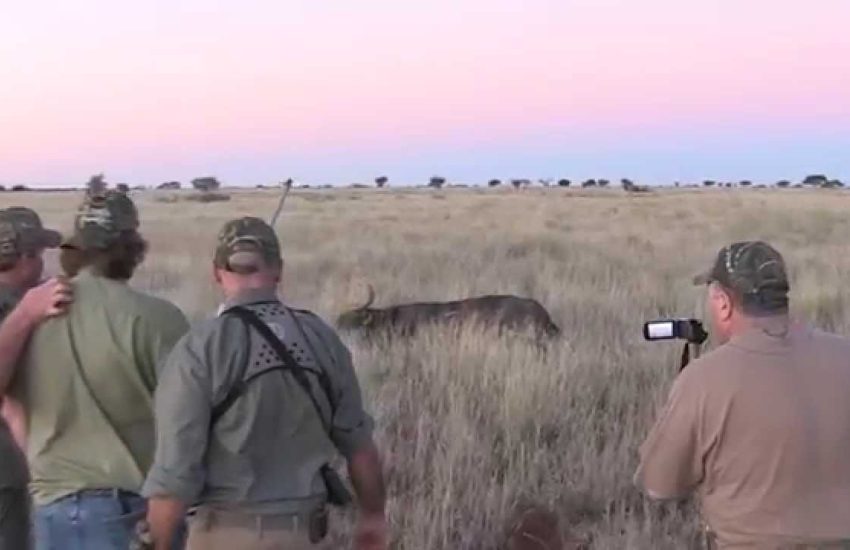
The narrator introduces the sequence as amateur footage shot by other tourists. We are, he says, in an African nature park: in some editions it is Angola, in others Namibia; in many versions circulating online the park is called “Wallasee” and there is even an exact date, 18 February 1975. The protagonist is a Dutch tourist, Pit Dernitz or Pitt Doenitz, on holiday with his family.
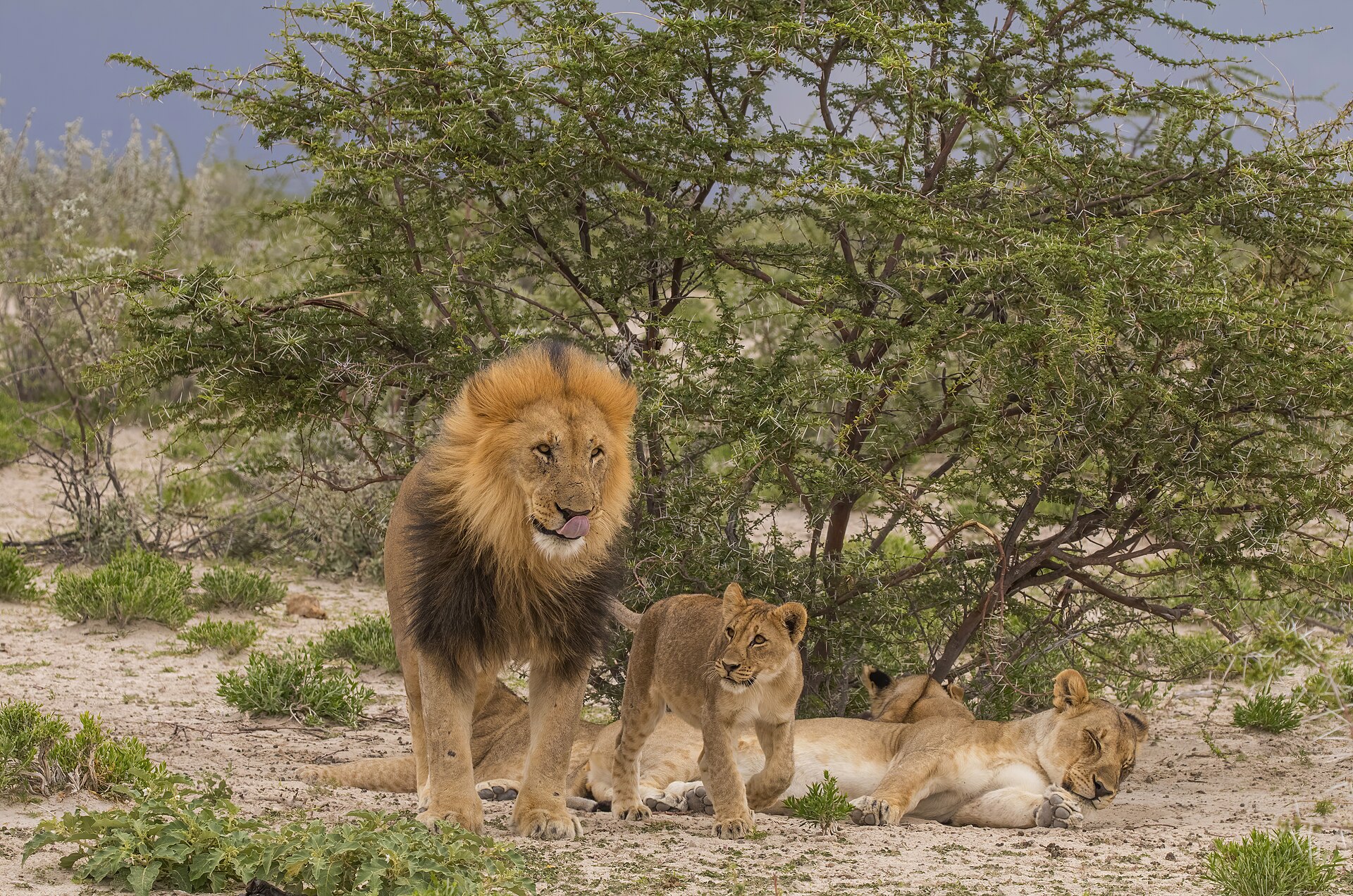
The cars stop near a group of lions. The man gets out to film. A lioness slowly approaches, then attacks him and drags him to the ground. Other lionesses arrive. The footage shows the people left in the cars, who do not intervene. The sequence ends with details viewers never forget, including a shot of a lioness holding the man’s camera in her jaws.
There is no need to add more. Those who have seen the scene remember above all its slowness and helplessness: nobody screams, nobody runs, everything happens as in a bad dream.
Why everyone believed it
Today it is easy to be sceptical. In 1975 it was much harder. There was no internet, no online archive to check a name or a place. The film was presented as a documentary, distributed by a major production company, with a text signed by one of Italy’s most famous writers. The grainy, silent footage looked exactly like an amateur home movie.
There was another, simpler reason: incidents with big cats in African parks do happen, and from time to time they make the news. The idea of a careless tourist getting out of his car was, sadly, perfectly believable. The name, the place and the date did the rest.
The clues that it was fake
Over the years, however, people who rewatched the scene carefully began to notice too many things that did not add up.
- No news. There is no newspaper report from the time about a Dutch tourist killed by a lioness in Angola or Namibia, no obituary, no police report.
- A park that doesn’t exist. There is no record of a nature park called “Wallasee” in either Angola or Namibia, and the name itself sounds neither African nor Portuguese.
- The wrong name. Pit Dernitz or Pitt Doenitz is not a typically Dutch name, and it changes from version to version.
- The direction. For amateur footage, the sequence has very “cinematic” shots and cuts: close-ups of the relatives, changes of viewpoint, a zoom at just the right moment.
- The landscape. Several viewers have noticed that the vegetation looks more Mediterranean than African.
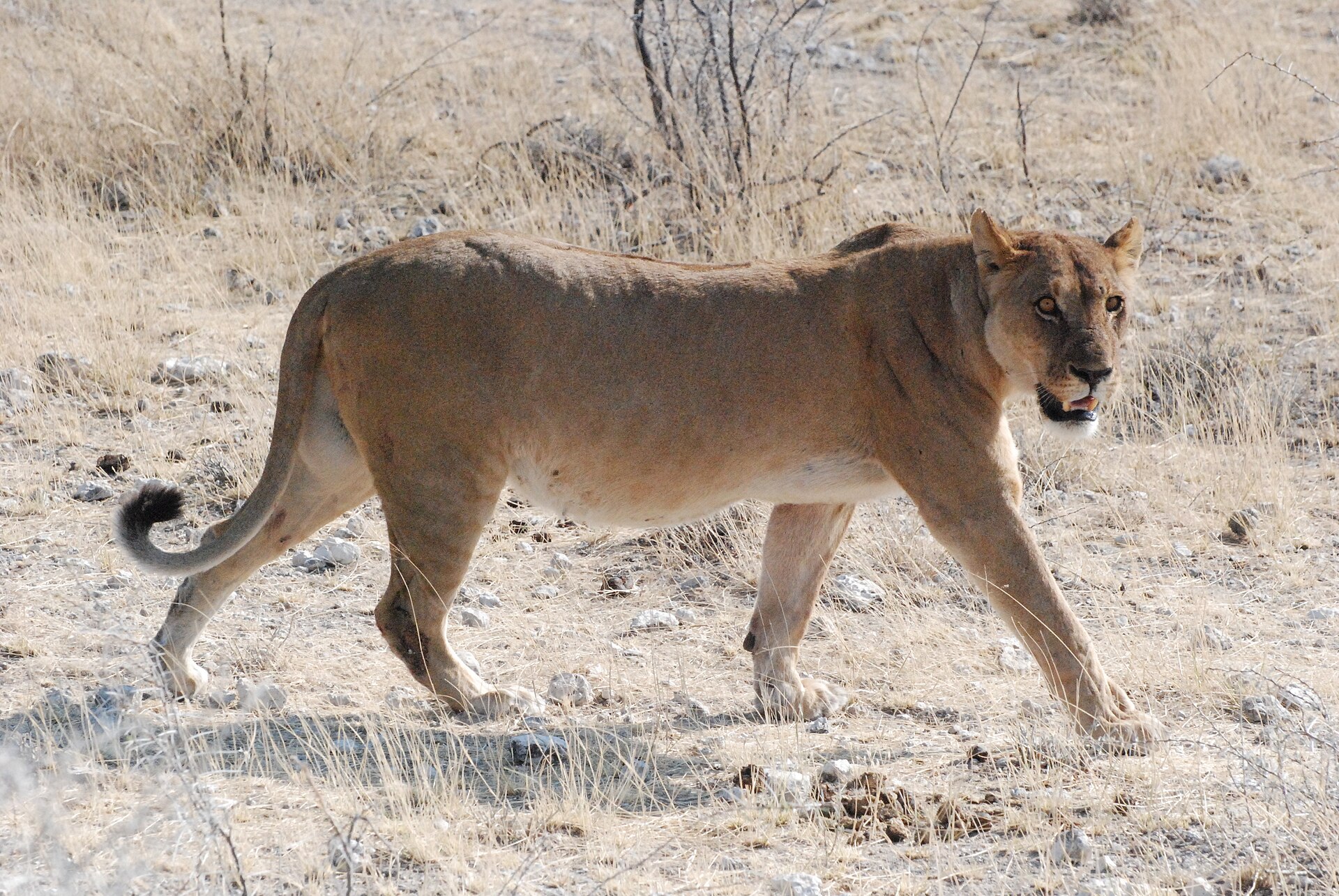
- The lionesses. The animals move with unusual calm, almost listlessly, more like animals used to people than wild predators.
- Nobody intervenes. No car moves towards the animals to scare them off, nobody sounds a horn. The film blames the terrain, but the explanation is hardly convincing.
Those who still believe the footage is authentic have always offered understandable arguments: the family may have wanted silence, the park’s name may have been misspelled, the editing may have been done later. But in fifty years nobody has found any concrete proof that Pit Dernitz ever existed.
The confession: Formia, tame lions and a dummy
The turning point came many years later. In 2011 Franco Prosperi, the co-founder of the genre who had helped re-edit the film, described how the scene was supposedly made. According to his account, it was not shot in Africa but in Italy, in a private park near Formia, in the province of Latina, with tame lions. The victim was not a single person: the tourist was played by three different people. And the mutilated body seen at the end was a dummy made by Carlo Rambaldi, the special-effects master who years later would win an Oscar for E.T. the Extra-Terrestrial.
Not all accounts agree. Mario Morra, in an interview, spoke of a scene prepared with a supplier of animals for films, then seemed to backtrack. Prosperi himself admitted that the production often bought amateur 8mm footage and “blew it up” for the cinema, without saying this was the case here. Some scholars of genre cinema have suggested the sequence may be at least partly authentic. Online, there are also names of alleged stuntmen, never verified.
The overall picture, however, is clear. Between Prosperi’s account, the total absence of any evidence and the visual clues, the vast majority of film historians consider the scene staged. And the detail of the lioness with the camera in her mouth, which some have read as a final wink at the audience, now looks almost like a signature.
Not the film’s only trick
The lion scene was not an isolated case. Other parts of Ultime grida dalla savana are also considered reconstructed or entirely invented: the campaign against fox hunting led by a fictitious animal-rights association, an ecology rally featuring a young Ilona Staller, and above all the final sequence of mercenaries killing indigenous people in South America, introduced with captions vouching for its authenticity. Some footage was also taken from Africa Addio, the 1966 film by Jacopetti and Prosperi.
That was the very mechanism of the genre: mixing truth and fiction until viewers could no longer tell them apart.
Censorship, imitations and online legends
On release the film caused a scandal. In Australia it was banned in 1976 and returned to cinemas, cut, only ten years later. In Finland it was banned outright. In the United Kingdom it was released with almost ten minutes of cuts. In Italy it was rated 14+.
Meanwhile the lion scene began a second life. It was reused in the video series Traces of Death, while the notorious Faces of Death (1978), another fake documentary about death, staged a version of it with a bear. Climati and Morra went on with Savana violenta (1976), advertised as “more shocking than the first”, and Dolce e selvaggio (1983). According to several critics, their style also influenced Ruggero Deodato’s Cannibal Holocaust, released in 1980, the film that took the “fake real” game to its extreme.
With the arrival of the internet the footage began circulating again, often cut and out of context, with titles like “man eaten by lion: real video”. Many people see it for the first time that way, knowing nothing about the film it comes from. And the name Pit Dernitz is still searched for as if he were a real victim.
Why we want to believe the worst
The story of Pit Dernitz says much more about us than about lions. A name, a place and a date are enough to make almost anything believable. A grainy image seems more real than a sharp one, precisely because it looks “stolen”. And a serious voice assuring us that “this really happened” switches off much of our critical sense.
It is the same mechanism that, decades later, fuels chains of “shock” videos on social media. The difference is that in the 1970s someone made money at the box office; today the currency is views. The result, though, is the same: a story that probably never happened keeps being told as news.
The tourist who may never have existed
Perhaps one day a document will surface, a set photo, an elderly actor willing to say he was “Pit Dernitz” for a day, on a hillside near Formia. Perhaps not. For now what remains is the image of a man stepping out of a car into a savanna that, in all likelihood, was not a savanna at all.
And perhaps that is the real horror of Ultime grida dalla savana: not a man’s death, but how easily millions of people believed they had seen it.
If you are interested in the line between reality and fiction in death footage, read also our article on the snuff films that circulate online.
The car number plates are Rhodesian. I was at school in Rhodesia in 1975 and I remember reading about this incident. Some tourists (Belgian or French I seem to recall) did go to the Lion and Cheetah Park, just outside Salisbury (now Harare). A man got out of the car to get pictures and was attacked and killed by lions. The L&C Park is still going in Zimbabwe at the same place outside Harare. It is a small fenced enclosure of a few acres and you can drive through in your own vehicle (dont need a 4×4). BUT there are lots of warnings to not get out of your car. These European tourists seem to have ignored the sign and paid a terrible price. The old cars are the types that were available in Rhodesia at the time. Timelinewise this was just as the Bush War was hotting up.
The vehicle Pitt got out of was a Renault R4. The one next to it was a R6. There was an old Chevrolet’ Impala. Alll had Rhodesian plates. I distinctly recall this incident being reported and seeing pictutes in the now defunct Scope Magazine and also a report in the Sunday Times. I cannot recall where it took place. The Lion and Cheetah park outside the then Salisbury is a distinct possibility.
Thank you very much for these new elements!
Wouldn’t there be blood on the Lion’s jaws?
The plates are not from Rhodesia. The plates are from Namibia. Have a look http://worldlicenseplates.com/
Senoslav, number plates change all the time. You can’t say with any certainty that these are ‘not’ Rhodesian plates. Put it into another context of identification; Ian Smith, what do you know about him, without looking it up!
Don’t really care one way or another ,he was silly to get out of his vehicle but I hope the lion was ok tho
I see people claiming it to be fake because of the person being listed as an actor on imdb. Any real person that appears on a movie or documentary is regarded as an actor by the site, regardless of being a professional thespian or simply someone granting an interview of caught by a camera, so it proves nothing.
How about a third hypothesis?
Maybe there is at least some degree of truth to the story. Maybe it realy happened, even if not exactly as depicted on the film.
Maybe the movie attempt to re-enact (in a staged way) one event that actually has taken place. The footage may be faked, edited, manufactured, but the story that they were trying to portray may be real.
This would be nothing new.
Yes, it would relegate the movie to be labelled as fake in the sense that it pretends to be real, with authentic footage, while it wouldnt be the case.
People and names may have been changed, but I do see a false dichotomy being presented.
People think that if they are somehow able to discovery files from papers dealing with this issue then the movie scene must be real. This isnt a necessary conclusion. Maybe the event really did take place and somehow the movie makes did caught word of it. Maybe the original footage (IFit existed) was unable to be used for a reason (bad quality, objections from the family, whatever motive…) so they simply decided to stage their own version of it and try to present if as real, found footage that was used on a trial.
This could actually make a lot of sense, because a superficial analysis could indicate that the movie was in indeed real simply because there would be reports of such an attack. it would lend false credence to the movie.
Sometimes moviemakers will do that. Present their own re-enactements of real events, or versions based on modern urban legends.
It was a real event. I remember it well. It was reported in the Uk press at the time with a number of papers carrying the story. There were many photos though of course no film in those days. One photo showed his arm sticking up above the lions and his thumb and first two fingers had been bitten off. A lot the people trying to say it waa fake were not born then.
Yes I watched the video and yes it is absolutely real, the man’s first mistake was being NAIVE, his second mistake was he crouched downward not that he still not of been attacked because yes he would of the lion behind him which he did not notice viewed him as another wondering animal. All the lions acted the way lions act when they just made a kill the female try to eat as quickly as they can because they know once the male sees the kill he will take over and that’s exactly what happened. This man made a fatal decision the lions seen him as another easy opportunity to eat. I’m very good with picking out real videos and fake and this is absolutely real and I felt so bad for the man and his family. The lions should have been shot in 1975 because once they tasted human blood they would have killed again and again.
Liam Katt, what the press reported was sourced by the film but there’s no actual source outside that. My take is that it is fake because it’s a Mondo type film which are mostly fake.