
 Posted by
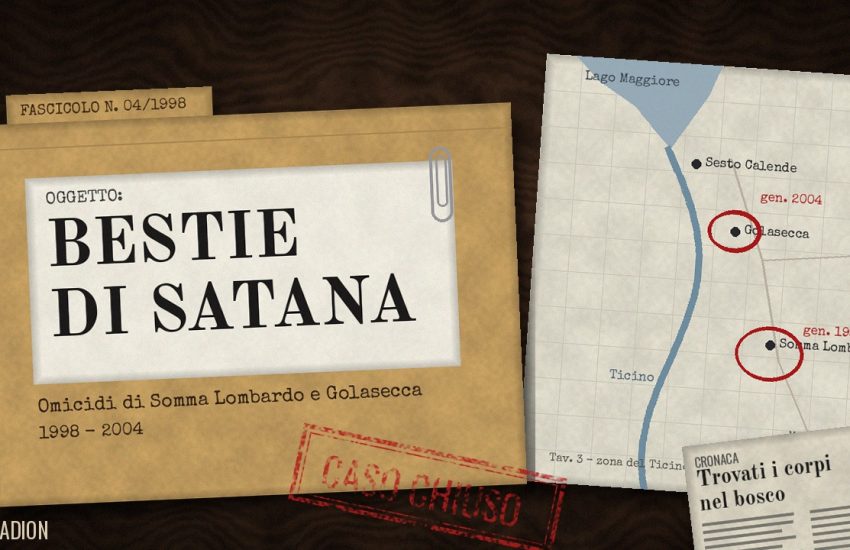
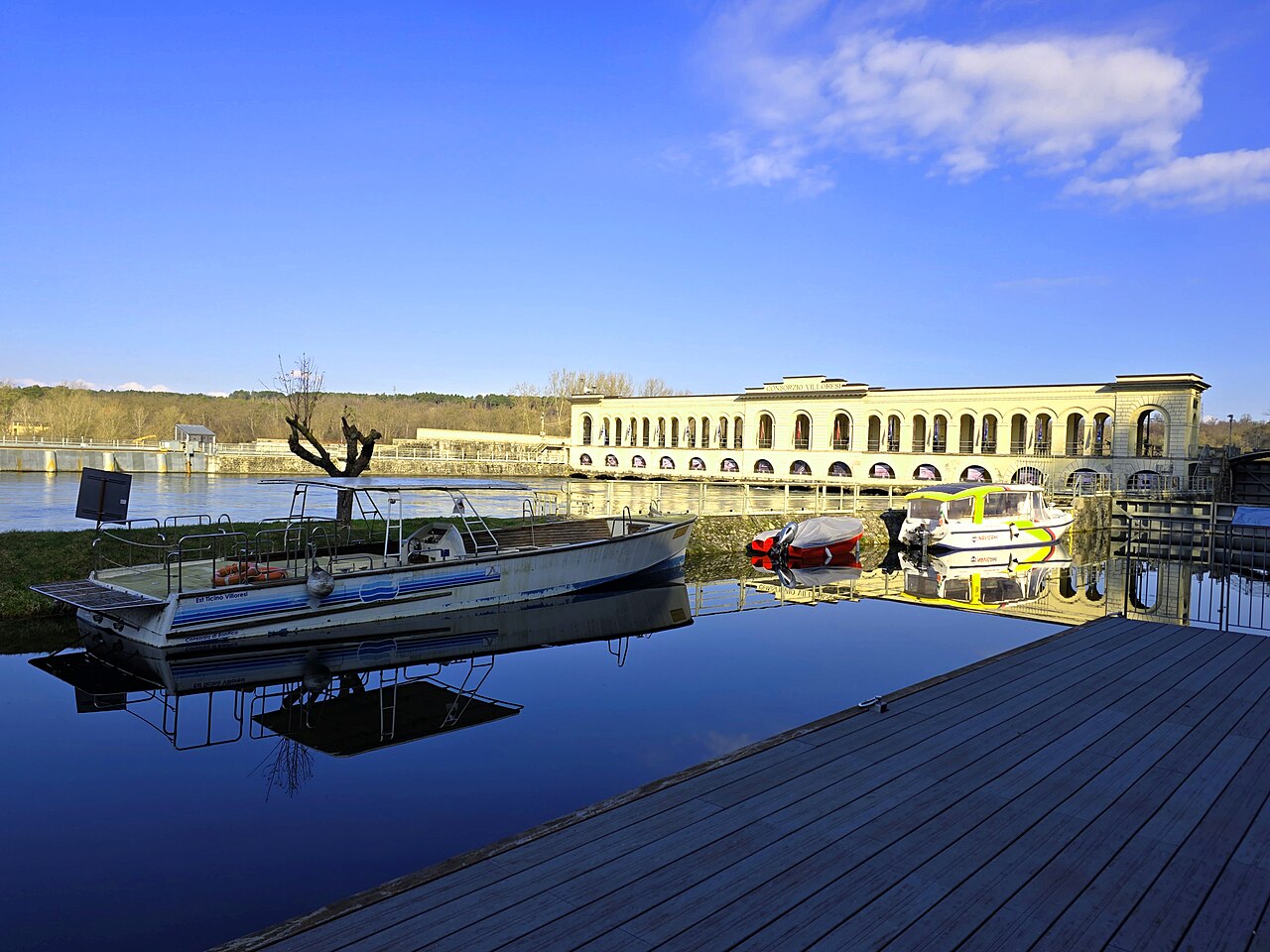
Saturday morning, 24 January 2004. Near the Panperduto dam at Somma Lombardo, in the province of Varese, north-west of Milan, a car has crashed into a low wall. Inside are Andrea Volpe, 30, and his 19-year-old girlfriend, Elisabetta Ballarin. Both are high on drink and drugs. Volpe tells the Carabinieri that some thugs attacked them. Nobody believes him. At the hospital, the young woman keeps repeating a name: Mariangela.
A few hours later, in the garden of a chalet in the woods at Golasecca, police find the body of Mariangela Pezzotta, 27, Volpe’s former girlfriend. It looks like a crime of drugs and jealousy. In fact it is the first thread of a story that will lead to two teenagers missing for six years, a suicide that was not a suicide, and a group of young men who called themselves the “Bestie di Satana”: the Beasts of Satan.
Metal, drugs and small-town boredom
The Beasts of Satan were not a cult with a doctrine and a hierarchy. They were young men from the towns between Milan and Varese who drifted together around 1995-1996. What bound them was extreme metal, black and death, and above all drugs; some of them were dealers. They met at Milan’s Sinigaglia flea market, in Parco Sempione and at the Midnight, a metal pub in Via Altaguardia. Or in the woods of the Ticino valley around Somma Lombardo.
Scholars call what they practised “acid Satanism”: borrowed symbols (pentagrams, inverted crosses, 666), bedrooms painted black, plastic goat skulls, the Necronomicon (a book invented by H. P. Lovecraft). There were “tests of courage” such as stubbing out cigarettes on their arms and biting, and a blood pact: the only way out, it was said, was death. The youngest, Mario Maccione, was seen as the “medium” who spoke for demons while in a trance.
The names that would end up in the court rulings were Paolo Leoni, nicknamed “Ozzy”, regarded as the charismatic leader; Nicola Sapone, a plumber from Dairago and, according to the judges, the most ruthless killer; Andrea Volpe; Mario Maccione, a guitarist who was a minor in 1998; Pietro Guerrieri, known as “Wedra”; Marco Zampollo and Eros Monterosso. Andrea Bontade, Fabio Tollis and Chiara Marino also belonged to the circle. They would become its victims.
Who was really in charge is still debated. Fabio’s father, Michele Tollis, has always named Leoni. Volpe named Sapone. Sapone claimed the orders came from a demon speaking through Maccione.
Fabio and Chiara
Fabio Tollis was 16 and lived in Cologno Monzese, on the edge of Milan. In 1995 he had founded a band, Infliction, in which he sang and played bass. At first, his father says, it was all a game tied to the music. Chiara Marino was 19, the only young woman who was a regular member of the group.
In 1997 something broke. During a ritual, Maccione declared that Chiara “embodied the Virgin Mary”, and for the group that made her a target. Frightened, she wanted out. Fabio also began to pull away and to laugh at the rituals. To the others, he was now a threat.
The group decided to kill them both. There were at least two failed attempts in November and December 1997. The best known came on New Year’s Eve: the couple were left alone in a car and someone pushed a large firecracker into the exhaust. The car caught fire slowly, and the two got out without realising their lives had been in danger.
The night of 17 January 1998
On Saturday 17 January 1998, Fabio asked his father for a little extra money for a pizza with friends. Michele gave him 20,000 lire, twice his usual allowance. Fabio left home with Maccione and Zampollo. After the pizza, the evening moved on to the Midnight, where Chiara was too. At around 11.30 p.m. the two walked out, saying they were going to make a phone call. They never came home.
On the pretext of a ritual, Sapone, Volpe and Maccione took them to the woods at Mezzana Superiore, a hamlet of Somma Lombardo near the cemetery and a few miles from Malpensa airport. A pit almost two metres deep was waiting for them. It had been dug in the previous days with Guerrieri’s help. Andrea Bontade was supposed to keep watch, but he never showed up.
Chiara was killed first, stabbed by Sapone. Fabio tried to fight back. Maccione and Volpe attacked him with a knife and a builder’s hammer, and Sapone finished him off; according to the trial findings, he went on striking the bodies and mocked the dead. The two were thrown into the pit, one on top of the other. Two weeks later Sapone and Bontade went back to pour ammonia over the spot, so that animals would not pick up the scent.
The press later wrote about a full moon and a precise ritual. Fabio Sanvitale and Armando Palmegiani, authors of a book based on the court files, argue that nothing ritual happened that night. It was an execution, planned for weeks.
A father who would not give up
In the days that followed, the killers played the worried friends. They handed out flyers, joined the search and appeared on Chi l’ha visto?, Italy’s long-running missing-persons TV show. Leoni suggested to Michele Tollis that the couple had run off to Spain. In February 2003 Milan prosecutors closed the file: the two had left of their own accord.
Michele, a construction worker, never believed it. For six years and four months he investigated on his own. He haunted the metal pubs between Milan and Varese, went to 84 concerts across Europe, and collected names, phone numbers and tip-offs. He remembered that in Fabio’s last phone call his voice had been slurred, as if someone were telling him what to say. Leoni and Sapone, he later told the court, warned him to stop. Michele knew who they were. He just could not prove it.
The death of Andrea Bontade
Andrea Bontade, 19, had joined the group for the music. His brother told the court that he changed: he took the crucifixes down at home and said he had made a pact with the devil. By not turning up that night, he had become a traitor and a dangerous witness.
According to the rulings, the group repeatedly drugged him with hard drugs to push him towards suicide, until he got an ultimatum: if you don’t do it, we will. On the night of 21 September 1998, after a phone call and an evening of drink and drugs, Andrea drove his car into a wall at very high speed and was killed instantly. For years his death stayed on file as a road accident. Only after 2004 was it recognised as incitement to suicide. (One VareseNews court report gives the year as 1999, almost certainly a mistake.)
Golasecca, January 2004: the murder of Mariangela Pezzotta
Mariangela Pezzotta had once been Volpe’s girlfriend, and she knew too much about what had happened to Fabio and Chiara. According to the rulings, Sapone ordered Volpe to kill her and gave him a month to do it.
On the evening of 23 January 2004, Volpe invited her to dinner at the chalet in Golasecca where he lived with Elisabetta Ballarin. After an argument, he shot her twice in the face. Mariangela did not die. Volpe called Sapone, who struck her with a spade taken from the greenhouse. She was buried in a hole in the garden; the autopsy would find she was still breathing. Then Ballarin drove the victim’s car towards the canal to get rid of it, with Volpe following. They were so intoxicated that they hit a wall before they reached the water.
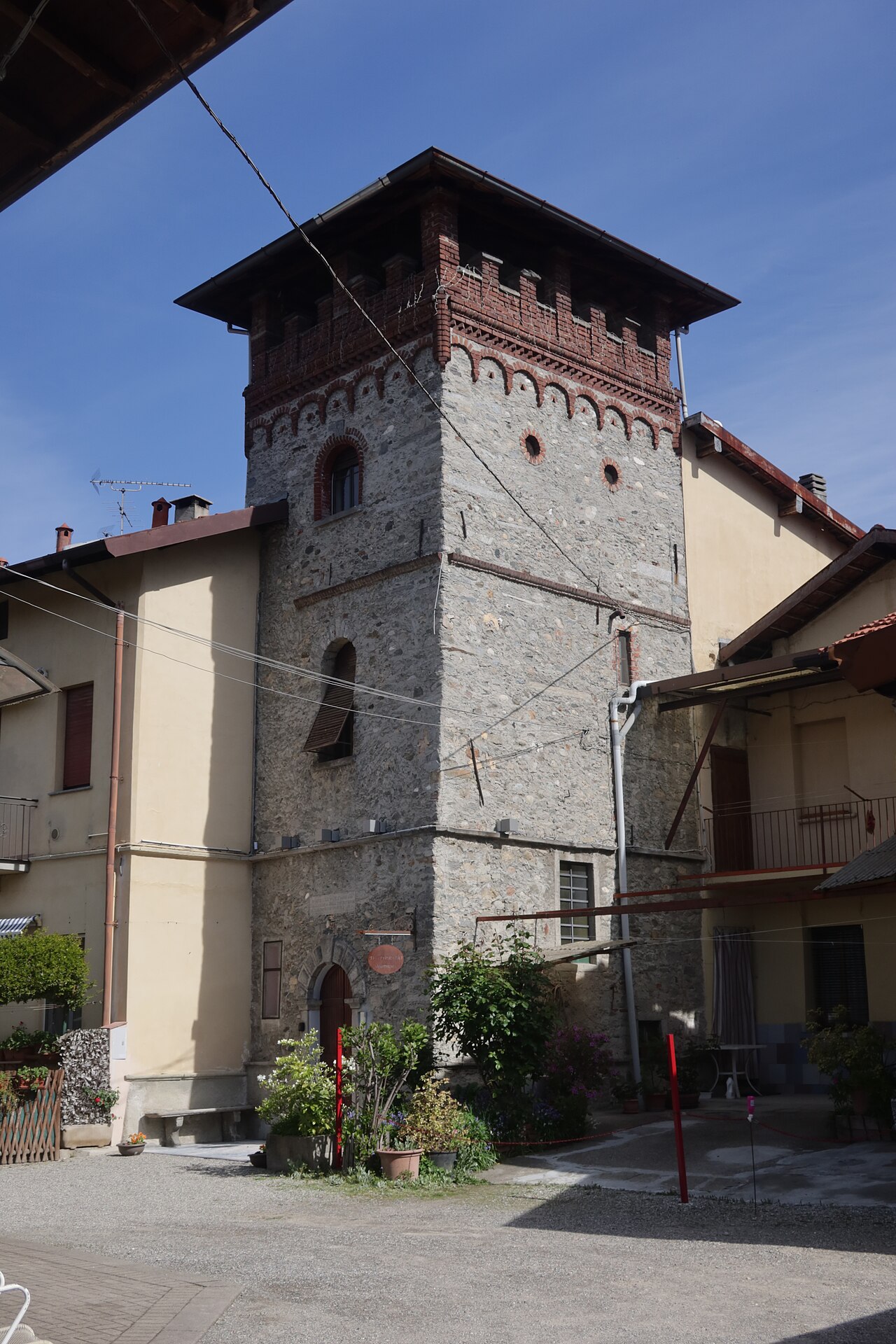
The duty prosecutor in Busto Arsizio, Tiziano Masini, went to the canal, then to the hospital, then to the chalet. There he found the body, signs of a clumsy clean-up and Satanist symbols. Volpe and Ballarin were arrested. Volpe talked about a quarrel over drugs, and nobody thought of a cult.
The confession that brought it all down
But Volpe’s name made the papers. A few days later Michele Tollis walked into the prosecutor’s office in Busto Arsizio. Volpe, he explained, had been among the last people to see Fabio and Chiara leave the Midnight. For the first time, investigators led by chief prosecutor Antonio Pizzi linked the two cases.
In prison, Volpe began to talk. He confessed to the 1998 double murder and to Bontade’s death, and named the others. In May 2004 he led the Carabinieri to the woods at Mezzana, where the mummified bodies of the two teenagers were found in the pit (on 18 or 28 May, depending on the source). The news broke on 4 June. Sapone, Guerrieri and Maccione were arrested in June; Leoni, Zampollo and Monterosso on 30 July. The investigating judge, Tom Novik, called the case “unique in the history of Italian justice”.
The trials and the sentences
There were three separate trials, depending on the procedure chosen and the defendants’ ages. The courts always rejected the charge of criminal association: the Beasts of Satan were convicted as individuals, not as an organisation.
- Fast-track trial. On 22 February 2005 a judge in Busto Arsizio sentenced Andrea Volpe to 30 years, ten more than the prosecution had asked for, and Pietro Guerrieri to 16. On appeal in 2006 the sentences were cut to 20 years for Volpe, thanks to his cooperation, and 12 years and 8 months for Guerrieri. Italy’s Supreme Court upheld them in October 2007.
- Assize court. On 31 January 2006 in Busto Arsizio, Nicola Sapone received two life sentences, Paolo Leoni and Marco Zampollo 26 years, Eros Monterosso 24 and Elisabetta Ballarin 24 years and 3 months for the Pezzotta murder alone (she was never a member of the group). On 15 May 2007 the Milan appeal court increased the sentences: life for Leoni too, 29 years and 3 months for Zampollo, 27 years and 3 months for Monterosso, and 23 years for Ballarin. In May 2008 the Supreme Court made them final, describing the double murder as a ritual sacrifice aggravated by base motives.
- Juvenile court. Mario Maccione was sentenced to 19 years in 2005. The term was cut to 16 on appeal, then raised again to about 19 and a half years (19 years and 2 months according to other sources) by a new appeal hearing in Brescia in November 2007. Another youth, also a minor at the time, was acquitted at first instance; we could not confirm the final outcome, so we do not name him.
In February 2005 several international news agencies reported that Maccione had been “acquitted”. He had only been cleared of criminal association.
Who has been released
According to press reports, Guerrieri was moved to a rehabilitation community in 2012 and released in 2013. Ballarin was granted day release to study, earned a degree in Brescia and has been on probation since May 2017; her petition for a pardon was signed by Silvio Pezzotta, Mariangela’s father. Maccione walked free in October 2017. In 2024 he caused an outcry by opening a “listening service” for people in distress, which Michele Tollis called absurd. Volpe finished his sentence on 14 March 2020, after 16 years; in prison he became an evangelical Christian. Sapone and Leoni are serving life, and we found no press reports of the release of Zampollo or Monterosso.
Other deaths: suspicions and closed files
Here facts and theories must be kept apart. Proven by final rulings are three murders and one incitement to suicide. Nothing else has ever been proved.
In 2004 the press spoke of 14, then 18 suspicious deaths in the area. The figure of 18 comes largely from Maccione, who also counted suicides. The cases most often cited are:
- Christian Frigerio, 23, who left home in Monza on 14 November 1996 after a phone call and was never found. Maccione named him as the group’s first victim. Excavations in 2006-2007 found nothing and the case was closed. His mother is convinced he was murdered.
- Andrea Ballarin (no relation to Elisabetta), found hanged in Somma Lombardo in May 1999. Volpe confessed to killing him, then retracted: his account did not match the evidence, and Sapone, whom he implicated, was abroad at the time.
- Doriano Molla, 26, found hanged in December 2000 in the Ticino park. At his mother’s request a judge twice refused to close the case, but it was finally shelved in 2011.
No court has ever linked these deaths to the group. The same goes for the so-called “third level”. Volpe spoke of people in Turin pulling the strings. Maccione talked of a “Sect X” and an initiation rite in a castle on the Ligurian coast. None of it was ever corroborated. Even Michele Tollis, who met Volpe in prison in 2006 to find out whether anyone had given orders, came away with nothing. Sanvitale and Palmegiani believe the “third level” mainly served to make Volpe look valuable to prosecutors.
Italy’s Satanic panic
The case broke at a sensitive moment. In the 1990s Italy had seen the trial of the “Children of Satan” in Bologna, which ended in acquittals, and fear of Satanic cults, imported from the United States, ran high. The Beasts of Satan seemed to confirm everything. For months the papers wrote about black masses and metal as the devil’s music. In 2005 the Vatican ran a course on Satanism and exorcism, the famous exorcist Gabriele Amorth spoke of Satan at work, Italian police set up a squad devoted to cults, and the BBC made a documentary about the case.
Over time, readings have become more cautious. One judge described the defendants as “weak, immature personalities” rather than devotees. A 2013 study in the Journal of Forensic Sciences concluded that the violence came from boredom, rebellion, drugs and a hunger for power, not from religious belief or mental illness. Michele Tollis rejects the idea that they were just a bunch of addicts: the murders were planned for weeks and the bodies carefully hidden. And the music, he says, had nothing to do with it.
Books, films and podcasts
Books on the case, all in Italian, include I ragazzi di Satana by Luigi Offeddu and Ferruccio Sansa (2005), Mario Maccione’s own L’inferno tra le mani (2011), Bestie di Satana by Sanvitale and Palmegiani (2021) and Il più bel trucco del diavolo by Gianluca Herold (2024), built on more than a hundred interviews with Volpe. The independent film In Nomine Satan (2012) and the stage play Poco più di un fatto personale (2022) were inspired by the story. Popular podcasts include Stefano Nazzi’s Indagini (2022) and BESTIE by Antonio Cristiano and Marco Maisano (2024). So far there is no Netflix or Sky docuseries; in April 2025 Colorado Film announced a feature film to be directed by Francesco Carrozzini.
What remains
Fabio Tollis is buried in Cologno Monzese, and young people in metal band T-shirts still visit his grave. A handbike race, “Mariangela con noi”, is named after Mariangela Pezzotta. Michele Tollis, who spent six years doing a job that should have been done by others, has said he will never forgive.
The Beasts of Satan were not an army of evil. They were small-town young men who built themselves a dark myth out of records, drugs and borrowed symbols, and then decided to take it seriously. In the end, there was no devil. There were two teenagers in a wood near Malpensa, a 19-year-old dead against a wall, a young woman buried in a garden. And a father who kept searching when everyone else said they had simply run away.
Sources
- Bestie di Satana – Wikipedia (IT)
- Beasts of Satan – Wikipedia
- Le Bestie di Satana – CESNUR, Encyclopedia of Religions in Italy (IT)
- J. Birkhoff et al., The “Bestie di Satana” Murders – Journal of Forensic Sciences, 2013
- Bestie di Satana, tutto cominciò così (Michele Tollis’s testimony) – VareseNews, 2005 (IT)
- Bestie di Satana, un tuffo nell’orrore – VareseNews, 2004 (IT)
- Sentenza Bestie di Satana: tutti colpevoli – VareseNews, 2006 (IT)
- Chieste severe condanne per Maccione e Magni – VareseNews, 2006 (IT)
- Vicenda Doriano Molla, non è ancora finita – VareseNews, 2010 (IT)
- Bestie di Satana, Andrea Volpe è tornato libero – VareseNews, 2020 (IT)
- L’omicidio di Mariangela portò alla luce la scia di delitti – SaronnoNews, 2023 (IT)
- Bestie di Satana, 25 anni fa i delitti che sconvolsero l’Italia – SaronnoNews, 2023 (IT)
- Lo struggente ricordo di Michele Tollis – LegnanoNews, 2024 (IT)
- La storia del padre detective – L’Espresso, 2023 (IT)
- Quella setta che seminò orrore e morte – Avvenire, 2013 (IT)
- Interview with Sanvitale and Palmegiani – il Giornale, 2021 (IT)
- Quelle Bestie di Satana erano partite dalla Riviera – il Giornale, 2005 (IT)
- Christian Frigerio e le Bestie di Satana – Il Giorno (IT)
- Michele Tollis interview – Il Giorno, 2019 (IT)
- Bestie di Satana oggi: Mario Maccione – Quotidiano.net (IT)
- Mario Maccione apre uno sportello di ascolto – Open, 2024 (IT)
- Interview with Gianluca Herold – Panorama, 2024 (IT)
- Il caso delle “Bestie di Satana” – Il Post, 2022 (IT)
- Colorado Film announces the project – CinemaItaliano.info, 2025 (IT)
- Three More Arrests Made – Metal Reviews, 2004
- Jóvenes de secta satánica condenados a prisión por asesinatos en Italia – ACI Prensa, 2005 (ES)
