 Posted by
 Help Emadion grow, click here.
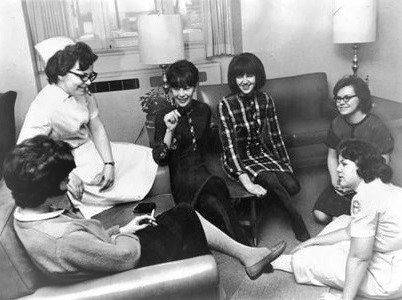
The air was thick with sweat and fear. Corazon Amurao, known as Cora, a 23-year-old nursing student, had secretly slipped under a bed, while on the other side of the door she heard noises she would never forget: her friends being killed one by one.
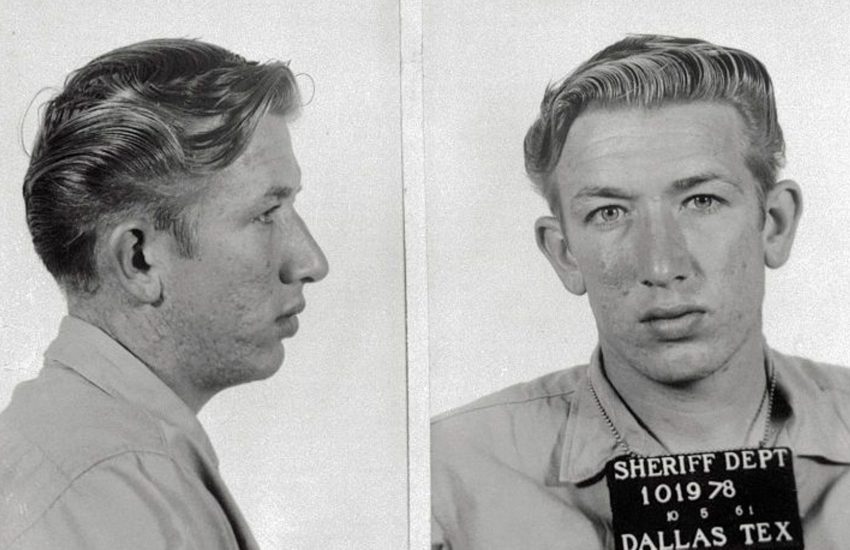
It was around midnight when the blond man with a thick Southern accent entered their dormitory at 2319 East 100th Street in Chicago. He had a knife and a gun, but he spoke with frightening calm. “No one will get hurt if you obey,” he said as he tied the girls up with strips of torn sheets.
The man, who she would later discover was named Richard Speck, took her roommates away one by one. First Pamela, then Suzanne, then Mary Ann… Each time, after a few minutes, she heard a thud, sometimes a rattle, then the tap running. Speck washed his hands after each murder. Before the man separated the girls, locking them in different rooms, Cora decided to crawl under the bed. Her heart was in her throat and she tried not to make the slightest noise as she heard her friends dying one by one.
“When he took Valentina, the last one before me, I heard him say ‘Masakit!’ ‘It hurts!’ in Filipino,” Cora would recount years later. Then, silence. For five interminable hours, she remained motionless, convinced that she would be next. However, the killer was drunk and under the influence of drugs and had not noticed that when he entered the house, there were nine girls. Having seen the eight beds in the dormitory and killed eight girls, he thought he had killed them all, but he did not know that on that very night, a friend of the students had decided to visit them, unwittingly walking to her death. That is why Cora was saved.
Only at dawn, when the sun began to filter through the windows, did Corazon find the courage to crawl out. The scene that greeted her was a nightmare: Gloria Davy, naked and lifeless on the sofa, strangled with her own underwear. The other girls lay in the nearby rooms, each killed in a different way.
Leaning out of the window, Cora screamed what would become Chicago’s most famous cry:
Oh my God, they’re all dead!
Her testimony would have been crucial in convicting Speck. But for Cora, that night never really ended. “Every time I hear a bed creak,” she confessed years later, “it all comes back to me.”
The man with the knife and the hypnotic voice
Speck didn’t burst in like a tornado of violence. He entered methodically, almost politely, using his deep voice and Texan accent as a psychological weapon. “Don’t worry, I won’t hurt you if you obey,” he repeated as he tied up the girls with almost professional precision.
The nurses, initially paralyzed with fear, tried to reason with the man who spoke calmly as he tied them up. With conciliatory tones that hid their terror, one after another they offered him what they could, such as their savings or promises to help him find work. But every word fell on deaf ears, as Speck continued his work with methodical precision, as if those pleading voices were just background noise. He cut the sheets with the same hunting knife he would soon use to pierce Pamela Wilkening’s heart. When Suzanne Farris tried to escape, he caught up with her in a few long strides and stabbed her in the back, simply saying, “Where do you think you’re going?”
Speck acted with an unsettling methodicalness that revealed a cruel and calculated technique. His hands, trained during his years in the Navy, created knots as perfect as they were lethal. He isolated his victims in different rooms, a coldly effective strategy to prevent any attempt at collective resistance. His violence followed a ruthless rhythm: quick and deadly blows for the most part, but with terrible exceptions. Gloria Davy was forced into prolonged agony, kept alive for hours as the last, tragic victim of that night of horror, before her underwear became the instrument of her strangulation. Every gesture, every decision revealed a mind that had planned the horror with lucid determination.
That night, Speck never lost control. In fact, he seemed at ease, as if he had finally found his true purpose. When he left the house at 2:37 a.m., he stopped to wash his hands in the basement sink. Then he disappeared into the darkness, leaving behind the most brutal massacre in Chicago history.
The childhood that created a monster
Benjamin Franklin Speck, Richard’s biological father, is perhaps the only bright spot in the future killer’s life. He died suddenly of a heart attack in 1947, when Richard was only six years old. An honest worker and loving father, Benjamin worked as a packer at Western Stoneware in Monmouth, Illinois. His untimely death left little Richard at the mercy of Carl Lindberg, his mother’s new alcoholic and violent husband. When he got drunk, Lindberg took out his violent rage on Speck. The boy did poorly in school and always hung out with older kids, quickly becoming a criminal. Before the famous massacre, he already had a long list of crimes behind him.
Perhaps if Benjamin had survived, he could have put a stop to his son’s criminal drift. Instead, his absence created a void that no one, certainly not his brutal stepfather, could ever fill. That kind man, whom Richard remembered with rare moments of tenderness, became just a ghost of the past, while the boy slipped further and further into darkness.
In 1962, at the age of 21, he married Shirley Malone only because he had gotten her pregnant. Their “home” was a trailer full of empty bottles, where Speck regularly raped her. He threatened me with a knife and raped me, saying he had to have sex four or five times a day, Shirley later recounted. Finally, the woman found the courage to divorce her violent husband, just six months before he carried out the massacre of the schoolgirls. After the divorce, he was arrested for theft and stabbing, but his sister Carolyn helped him escape by bus. He returned to the town where he had spent part of his childhood and in April 1966 raped a 65-year-old woman and killed a barmaid, whose body was found with her liver destroyed by a blow to the abdomen. He was questioned, but managed to interrupt the interrogation with an excuse, promising to return.
When he did not return several days later to finish the interrogation, the police went to the hotel where he was staying, but Speck had already left.
On the day of the massacre, Speck had been drinking for hours in taverns. He had raped and robbed a woman and then, drunk and armed, wandered the streets of Chicago before breaking into the house of the massacre at around 11 p.m.
The manhunt and that cursed tattoo
After the murders, Chicago lived in terror for two interminable days while the police combed every corner of the city in search of the monster who had killed eight nurses. Meanwhile, Richard Speck moved like a shadow through the slums, unaware that his arrest was imminent.
The breakthrough came in the early hours of July 17, when Claude Lunsford, a homeless man with whom Speck had shared an evening of drinking, recognized him from a sketch published in a newspaper. Lunsford called the police, but no one showed up at the hotel where he was staying. Shortly thereafter, however, the killer was found bleeding after a clumsy suicide attempt. Rushed to Cook County Hospital, it was the young doctor LeRoy Smith who noticed the detail that would change everything: on Speck’s left arm, barely visible under the blood, was a tattoo with the words ‘Born to Raise Hell’, a detail noticed by Amurao and reported in all the newspapers.
During his arrest, a macabre haul was found in his pockets: the watch stolen from Gloria Davy, just five dollars left of the forty-two taken from the victims, and a bus ticket to Dallas with the words “Mom, I’m coming home” written on it. That tattoo, which he had gotten as a boy to look tougher, turned out to be the evidence that nailed him to the electric chair. As fate would have it, the criminal pride that had driven him to mark his skin became the signature that brought him to justice.
The trial: 49 minutes to the death sentence
The Peoria court held its breath as Cora Amurao stepped down from the witness stand and pointed her finger at Speck:
“This is the man who killed my friends.”
He didn’t bat an eyelid. With his dull blue eyes and a blue suit borrowed from his lawyer, he looked more like a bank clerk than a monster. Defense attorney Gerald Getty tried to argue insanity, but the expert witness confirmed: “He is a sociopath, but perfectly aware of his actions.”
The jury took less than an hour to reach a verdict, and he was sentenced to death by electric chair. However, in 1972, the Supreme Court abolished the death penalty, and Speck’s sentence was commuted to 800 years in prison. He died in 1991 of a heart attack.
Shocking videos of Richard Speck in prison
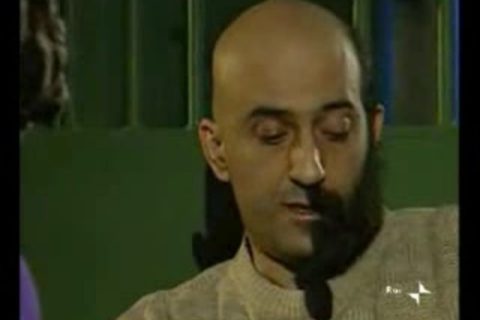
In 1996, an explosive video was found. The grainy images, presumably secretly recorded in 1988 at Stateville Penitentiary, showed a transformed Speck bragging about his life in prison and engaging in sexual acts with another inmate. In the controversial footage, the killer snorted what appeared to be cocaine, waved wads of cash, and proudly showed off his breasts, which had developed as a result of hormone treatments. Addressing an off-camera interviewer, Speck spoke with disturbing nonchalance about the massacre and, when asked why he had killed the girls, replied with a chuckle: