 Posted by
 The discovery of horror
The tragedy emerged when the maid arrived at Aguirre’s apartment at 200 Villa Crespo at around 1:30 p.m. on May 21st. As soon as she entered, she was confronted with a gruesome scene: one of the Seltzer-Leguizamón children was lying lifeless in the hallway, surrounded by a pool of blood. In shock, she immediately called the police, who discovered the other three bodies inside the house.
Initial investigations led investigators to suspect a crime within the family, with a triple murder followed by the suicide of the mother, Laura Fernanda Leguizamón. The door was locked from the inside, with no signs of forced entry, and a letter with confusing contents was found on the kitchen table, elements that led the authorities to this reconstruction. The absence of external intrusion and the nature of the wounds immediately ruled out the hypothesis of a crime linked to organized crime.
The victims and the dynamics of the crime
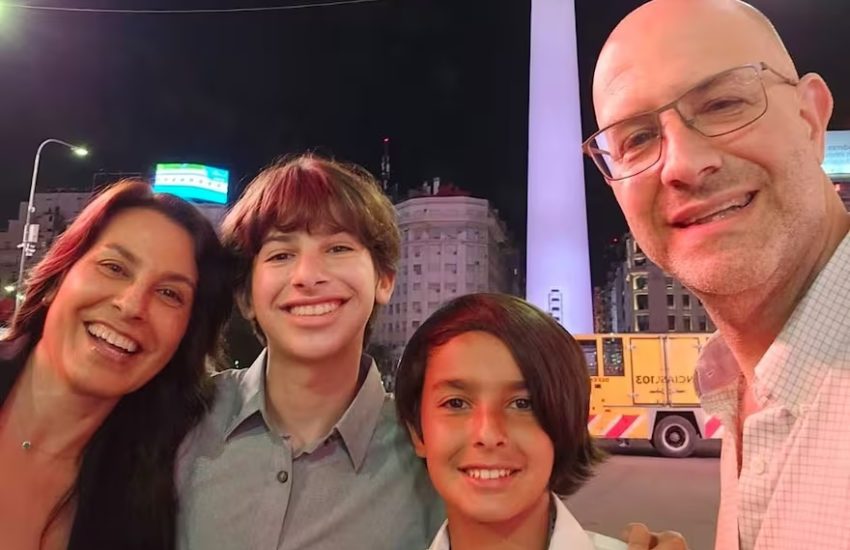
The four members of the Seltzer-Leguizamón family have been identified as Bernardo Adrián Seltzer, 53, his wife Laura Fernanda Leguizamón, 50, and their two teenage children, Ian, 15, and Ivo, 12. All died from stab wounds inflicted with extreme violence.
Investigators’ reconstruction indicates that Laura first struck her husband while he was sleeping in the master bedroom, without giving him time to react. She then went to her sons’ rooms: Ian tried to escape but was caught in the living room, while Ivo was attacked in his sleep. After the triple murder, Laura took her own life in the bathroom, where she was found with numerous self-inflicted wounds to her chest. The order of events was confirmed by the analysis of rigor mortis, which revealed that the woman survived for at least an hour and a half after killing her family.
The crime scene and key clues
The apartment in Villa Crespo looked like a scene from a horror movie, with traces of blood scattered throughout every room, from the bedrooms to the hallways to the living room. Investigators found two knives, both with fingerprints matching Laura’s left hand, as well as a trail of blood showing her path from the bedroom to the bathroom where she died.
Of particular significance were the barefoot footprints left in the blood, all matching the woman’s, which ruled out the presence of strangers. Fluff from the floor was found on the woman’s hands, showing that she had dragged herself across the floor before dying. In the kitchen, the handwritten letter, later authenticated as the woman’s work through handwriting analysis, was the decisive element in understanding the altered mental state of the perpetrator of the massacre.
The letter and the psychological breakdown
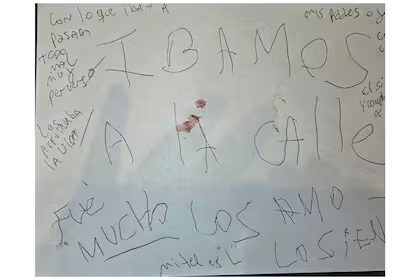
On the kitchen table, the letter left by Laura Leguizamón is the most chilling document in the entire case. Written in a state of obvious mental disturbance, the text appeared disjointed and full of anguish, with fragmented sentences alluding to deep inner turmoil.
Handwriting experts confirmed the authenticity of the writing, comparing it with the woman’s personal notes and documents, and also found signs typical of an acute psychotic state. Analysis of the content, together with the discovery of psychiatric drugs in the home, including antipsychotics and mood stabilizers, led investigators to speculate that Laura had stopped her therapy.
The woman’s sister confirmed to investigators that she had been suffering from psychiatric disorders for some time, while the maid had noticed a worrying change in her behavior in the weeks leading up to the tragedy. These elements paint a picture of a tragedy waiting to happen, in which uncontrolled mental illness had devastating consequences.
The final moments and the timeline
Forensic reconstruction has established that the massacre took place between 5 and 6 a.m., in a relatively short period of time but one filled with unprecedented violence. According to experts, Laura acted with methodical speed: first she killed her husband in his sleep, then moved to her children’s room.
Particularly chilling is the detail that Ian, the eldest son, managed to run several meters in an attempt to escape before being caught up with in the living room, where he left clear signs of a struggle. Little Ivo, on the other hand, had no chance of escape in his bunk bed.
The autopsy revealed that Laura lived for about 90 minutes after committing the murders, spending that time writing the letter and wandering around the house before inflicting fatal wounds on herself in the bathroom. Analysis of rigor mortis and blood spatter allowed investigators to reconstruct this macabre timeline with precision.
The warning signs that were overlooked
Despite the gravity of the events, there was no history of domestic violence in the Seltzer-Leguizamón family. Bernardo, an expert in the grain market who had built his fortune during the soy boom, and Laura, who appeared to be devoted to her family, projected an image of normality.
However, more thorough investigations revealed overlooked elements: Laura’s sister stated that she had been struggling with serious psychiatric disorders for years, although she had never shown violent behavior. The maid had noticed a progressive deterioration in her condition in the weeks leading up to the incident, with suspicions that she had stopped taking her medication.
The absence of an effective support system and the failure of family members to recognize the urgency of the situation contributed to creating the conditions for this tragedy, raising questions about safety nets for those suffering from serious mental illness.
The Villa Crespo neighborhood was shaken by the incident, with residents and neighbors describing the family as reserved but well integrated. The brutality of the events sparked a heated debate on the importance of psychiatric support and prevention mechanisms for mental health crises.
The aftermath of this tragedy leaves deep scars: four lives lost, a family destroyed, and a community wondering how to recognize the warning signs. As the spotlight fades, the realization remains that more effective monitoring and psychiatric support systems could, perhaps, have prevented the irreparable.