 Posted by
 If this story is true, Gil Perez would be one of the first people to have traveled by teleportation, albeit unintentionally. Gil was a soldier in the Philippine Civil Guard who lived in Manila in the 16th century. What makes him unique is that in 1593, he found himself mysteriously catapulted to Mexico in a single moment, without knowing how.
The enigma of an impossible leap
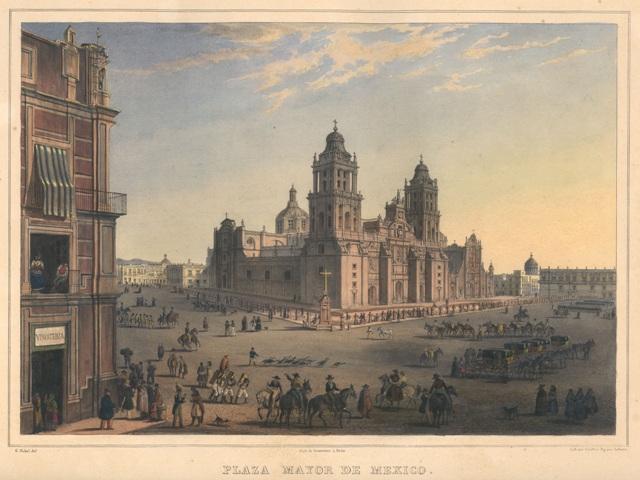
It was October 24, 1593, when the inhabitants of Mexico City were confronted with an incredible sight: a soldier in uniform, exhausted and confused, suddenly appeared in the Plaza Mayor, the heart of Spanish colonial power. The man, who identified himself as Gil Pérez, claimed to be a guard at the Governor’s Palace in Manila, Philippines, more than 14,000 kilometers away across the ocean. How was this possible?
Pérez said he had been on duty the night before, while political unrest raged in Manila. Governor Gómez Pérez Dasmariñas had just been assassinated in an ambush, and the colony was in chaos. But while standing guard, Pérez felt a sudden dizziness and, in the blink of an eye, found himself on the other side of the world, surrounded by strangers staring at him suspiciously.
The Mexican authorities, convinced they were dealing with a deserter or a madman, arrested him immediately. But there was one disturbing detail to his story: he was still wearing the uniform of the Philippine guards and swore that, as far as he was concerned, only a few hours had passed since the governor’s murder.
It was only months later, with the arrival of a ship from the Philippines, that the Mexicans discovered the truth: Dasmariñas had indeed died on those dates, and Pérez’s description matched that of a soldier who had actually been serving in Manila.
But how had he managed to travel halfway around the world in an instant? Was it a mistake, a legend, or something even more mysterious?
The chronicle of 1593: between history and legend
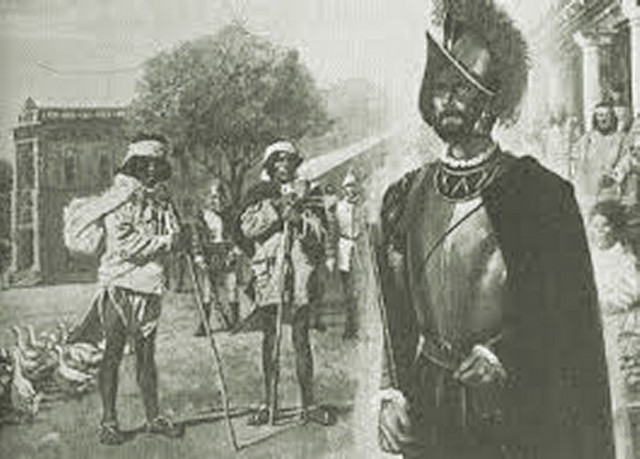
The only written account that directly mentions the case of Gil Pérez comes from the work Sucesos de las Islas Filipinas (1609) by historian and colonial official Antonio de Morga. In his work, de Morga described the assassination of Governor Dasmariñas and mentioned, almost incidentally, the strange appearance of a Filipino soldier in Mexico.
According to the chronicles, when Pérez appeared in Mexico City, the authorities were faced with a puzzle. The man did not speak Mexican Spanish but a Filipino-Spanish dialect, and his behavior betrayed his foreign origins. Furthermore, he provided precise details about the governor’s murder before the news could arrive by ship, a journey that took months at the time. His uniform, although worn, was intact and matched that of the Manila guards perfectly, but showed no signs of a real journey across the Pacific Ocean.
When transoceanic ships finally brought news of the assassination to Mexico, the authorities were confronted with two puzzling facts. First, the governor had died at exactly the moment when Pérez claimed to have “awakened” in Mexico.
Secondly, the uniform he was wearing matched that of the guards in Manila in every detail. Yet no one was ever able to explain how he had managed to travel thousands of kilometers in an instant. Curiously, apart from de Morga’s account, almost no other official Spanish document mentions the incident.
Some scholars have put forward hypotheses to explain this silence. The Catholic Church may have wanted to avoid stories of unauthorized “miracles,” while colonial officials may have feared that the story would cause panic among the troops. After all, if a soldier could disappear at any moment, who could say they were safe?