 Posted by
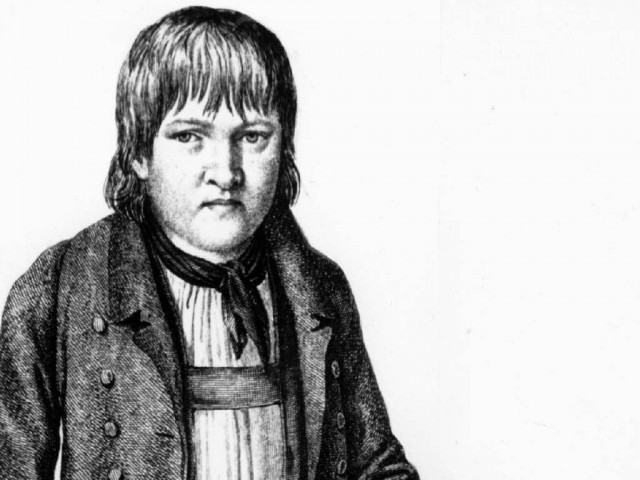
 On Pentecost Monday in 1828, the citizens of Nuremberg witnessed a disoriented teenage boy struggling to walk. His name was Kaspar Hauser, and his story would become one of the most baffling mysteries of the 19th century.
The story of Kaspar Hauser
The young Kaspar Hauser appeared in Nuremberg on 26 May 1828, dressed in ragged clothes: a tailless frock coat (an overcoat used in the 1800s as walking attire), a red scarf, and tall boots. He was confused, walked with difficulty, and repeated few words in Bavarian dialect, including the phrase that would become famous:
“I want to be a horseman, like my father was.”
He carried two letters, apparently written by different senders but actually penned in identical handwriting. The first letter, presumably written by his mother, declared the boy was named Kaspar, born on 30 April 1812, and that his father, an officer in the Sixth Cavalry Regiment, had died. The second letter, addressed to the captain of the Nuremberg regiment, stated the author had kept the boy imprisoned since birth, never letting him leave a cell. It also contained an unsettling line:
“Take him with you, or hang him.”
The anonymous sender also claimed to have taught him how to write. When taken to the police station, Kaspar demonstrated he could write his own name, but was unable to answer complex questions. Some later accounts, possibly fictionalized, described the boy as terrified of noises, incapable of lying, and even unable to distinguish a window from a painting. However, official documents from that time report that he had a “healthy complexion” and climbed the 90 steps leading to his room without difficulty, despite having pelvic and leg deformities caused by spending many years in a seated position. His arm also bore a smallpox vaccination mark, which at the time was reserved for noble children or those from wealthy families.
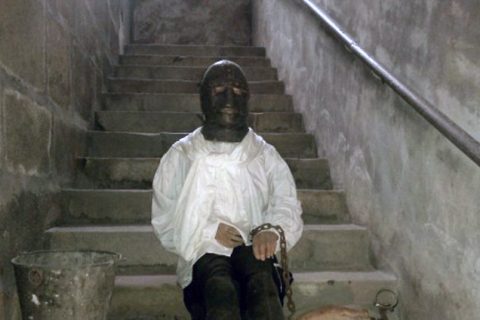
Initially considered a mentally disabled vagrant, he was confined in Nuremberg Castle, but within a few months his language skills improved rapidly, enabling him to tell his story.
Kaspar’s account
He claimed to have been kept for years in a dark cell measuring 2 meters in length, 1 meter in width, and 1.5 meters in height, containing only a straw mattress and some wooden toys (two horses and a dog). Each day, he would find bread and water, though occasionally the drink had a bitter taste that would make him fall into a deep sleep. Upon waking, he would discover his hair had been cut and his bedding changed.
Shortly before his release, a hooded man allegedly taught him how to walk and write his name before bringing him to Nuremberg. According to psychiatrist Karl Leonhard, such an experience would have been impossible to survive without causing permanent brain damage. Yet Kaspar became an international celebrity, immediately fueling theories about his potential noble origins.
The Nuremberg years
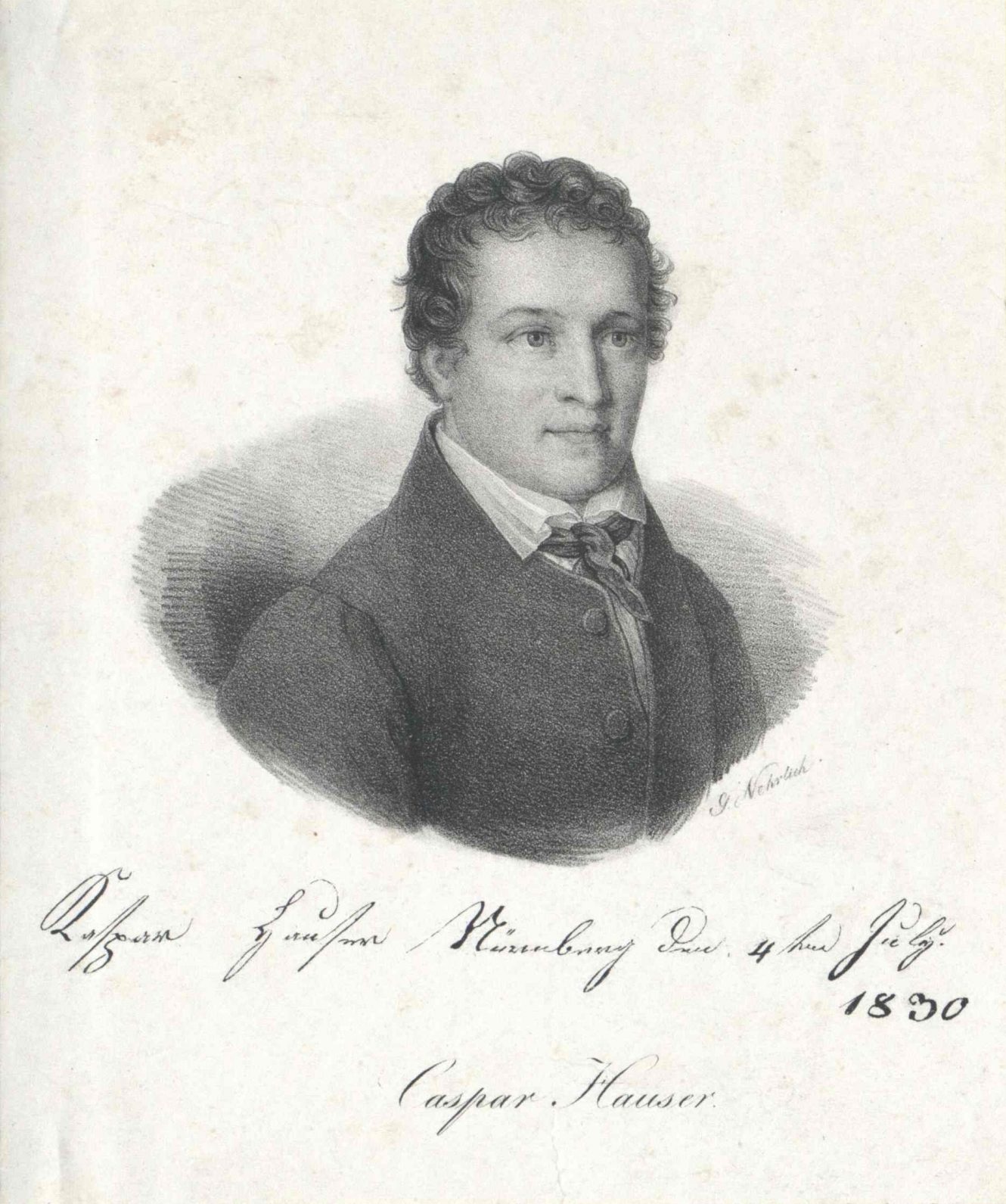
After his arrival, Kaspar Hauser was placed under the care of the city of Nuremberg, which supported him financially through private donations. He was entrusted to Georg Friedrich Daumer, a teacher and philosopher interested in his case. Daumer noted in him a remarkable talent for drawing and a rapid learning ability, but also a tendency to lie and manipulative behavior.
The First Mysterious Attack (October 17, 1829)
While staying at Daumer’s home, Hauser failed to appear for lunch. He was found in the cellar with a bleeding wound on his forehead and later claimed to have been attacked by a masked man, who had threatened him:
“You will die if you ever leave Nuremberg.”
He believed it was the same voice as his supposed jailer. However, the blood traces suggested illogical behavior: after being struck in the bathroom, Hauser had first gone to his room, then to the cellar, without calling for help.
Some suspected he had inflicted the wound himself with a razor (found hidden in his room) to gain sympathy, especially after an argument with Daumer. Despite doubts, authorities transferred him to the protection of Johann Biberbach, a local magistrate, and assigned him a guard.
The Second Incident (April 3, 1830)
A few months later, guards heard a gunshot from Hauser’s room and found him unconscious with a superficial head wound. He claimed to have accidentally bumped into a decorative pistol while reaching for books. However, Mrs. Biberbach called him “horribly deceitful,” and the case was dismissed as another attempt to attract attention. Kaspar was transferred again, this time to Baron von Tucher, who also began complaining about his lies.
The Arrival of Lord Stanhope (1831)
In 1831, the English nobleman Philip Henry Stanhope took an interest in Hauser, spending large sums to investigate his origins. He took him to Hungary, where Kaspar claimed to recall Hungarian words and even identified Countess Majthényi as his mother. Yet during the trip, he showed no recognition of places or people.
Disillusioned, Stanhope concluded he had been deceived and in 1831 entrusted Hauser to Johann Georg Meyer, a strict schoolteacher in Ansbach, promising (but never fulfilling) to later take him to England. Life with Meyer was difficult: Hauser, now an adult, worked as a copyist in a law office, but continued lying and seeking ways to regain lost attention.
This phase of his life ended with the most dramatic episode: his fatal stabbing in 1833, which deepened the mystery.
The Mysterious Death
On December 14, 1833, Kaspar Hauser returned home with a deep chest wound, claiming to have been stabbed by a stranger in a public garden in Ansbach. He reported that the man had first handed him a bag before attacking him, leaving behind a coded note written in pencil in mirror writing (right to left). The message read:
“Hauser will be able to tell you precisely where I come from and what I look like. To spare him the trouble, I myself will tell you where I come from. I come from the Bavarian border. By the river… I will even tell you my name: M. L. Ö.”
The wound proved fatal, and Hauser died three days later, on December 17. On his deathbed, he muttered incoherently about “writing in pencil,” never asking about the contents of the bag found in the garden. The investigation revealed inconsistencies:
-
The note contained grammatical errors typical of Hauser’s writing.
-
The triangular fold of the paper matched how he habitually folded his letters.
-
Despite its severity, the wound could have been self-inflicted—the knife had entered at an angle, as if guided by the victim’s own hand.
The court concluded it was a suicide disguised as an attack, possibly a desperate attempt to regain attention after Lord Stanhope’s abandonment. Conspiracy supporters, however, saw his death as definitive proof of a dynastic plot.
Theories: Prince or Impostor?
The Prince of Baden Theory
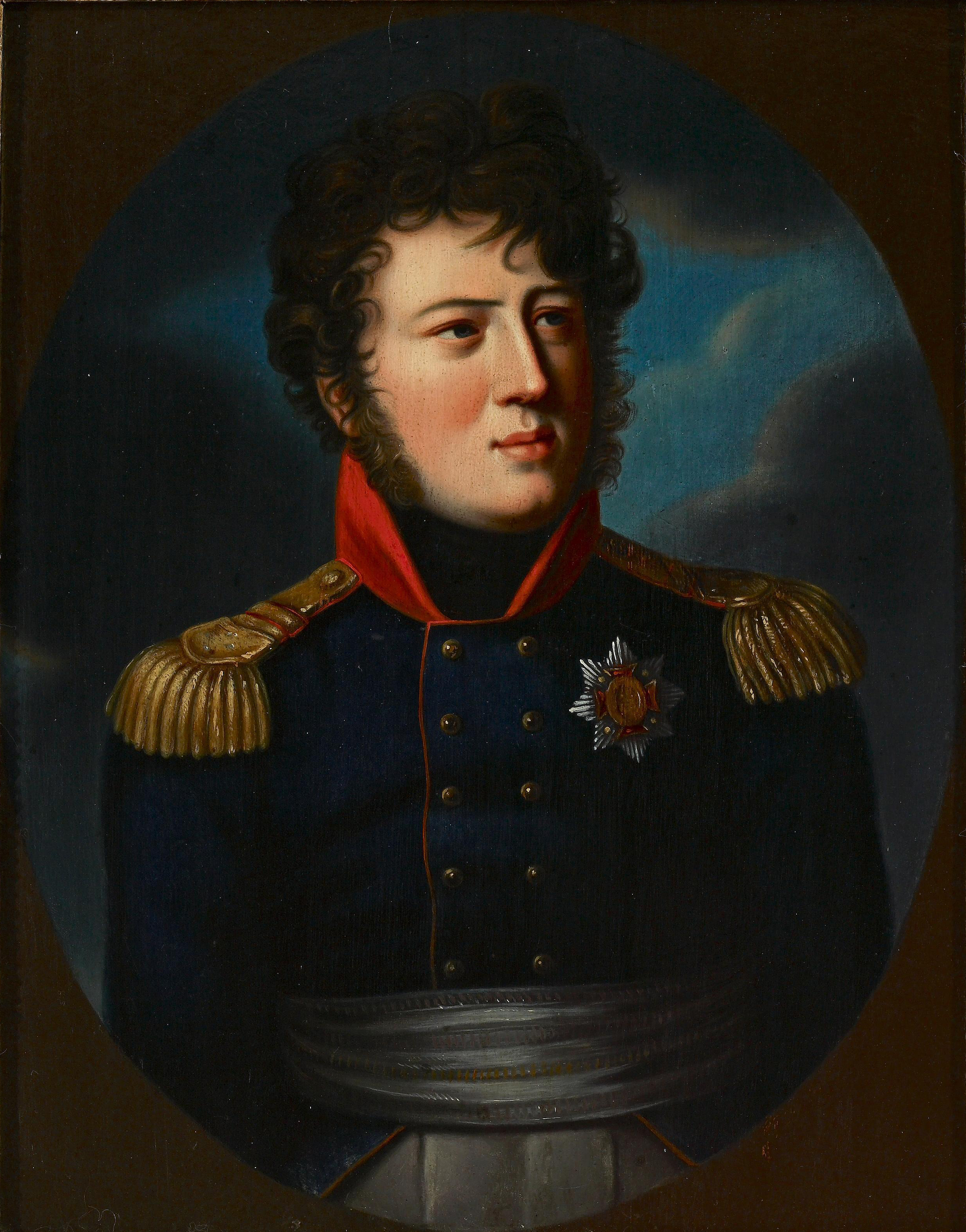
The most famous hypothesis claims Hauser was the legitimate heir to Grand Duke Charles II of Baden. When Charles II died, his son—born in 1812—should have inherited the throne, but the infant died after just 18 days. The crown then passed to Charles’s half-brother, Leopold, who initially had no dynastic rights. According to this theory, Leopold’s mother, the Countess of Hochberg, swapped the royal baby with a dead servant’s newborn, leaving no heir and enabling her own son to seize power.
This theory gained fame through Jakob Wassermann’s 1908 novel Caspar Hauser or the Inertia of the Heart.
Problems with the theory:
- Official 1812 documents record the infant’s baptism, autopsy, and burial, witnessed by doctors and family members.
- In 1951, letters from the prince’s grandmother detailed the child’s illness and death.
DNA Evidence
In 1996, an analysis of blood taken from Hauser’s clothing found no matches with descendants of Stéphanie de Beauharnais (his presumed noble mother). In 2002, a hair test appeared to show some connection to the family, but with high margins of error. Finally, in 2024, a new study definitively ruled out any relation, confirming that Hauser was not linked to the House of Baden.
Altre ipotesi
- Tyrolean Disease Theory: Some scholars suggest Hauser may have been a Tyrolean child suffering from an endemic illness that would account for both his physical deformities and cognitive impairments. This hypothesis points to nutritional deficiencies or genetic conditions prevalent in isolated Alpine communities as possible explanations for his condition.
- The Impostor Theory: Hauser’s well-documented tendency toward deception, the suspicious nature of his alleged assassination attempts, and the complete lack of verifiable evidence about his claimed imprisonment all support the view that he was a skilled mythomaniac. His behavior patterns, including self-inflicted wounds and elaborate fabrications, align with known cases of pathological liars seeking attention and sympathy.
The enigmatic figure of Kaspar Hauser inspired significant artistic works, including Werner Herzog’s 1974 film The Enigma of Kaspar Hauser and Peter Sehr’s 1993 biographical drama Kaspar Hauser. His story served as a powerful metaphor for isolation in Paul Auster’s novel City of Glass. References to Hauser appear in various theatrical productions and in Suzanne Vega’s musical repertoire.
In Ansbach, a commemorative plaque bears the Latin inscription:
«Hic occultus occulto occisus est»
(“Here a mysterious man was mysteriously killed”)
His tombstone carries the equally poignant epitaph:
«Ignota nativitas, occulta mors»
(“Unknown his origin, mysterious his death”)
The Enduring Question
Who was Kaspar Hauser truly? The mystery persists: a blend of historical fact and enduring legend that continues to captivate scholars and artists alike. The competing theories about his identity remain unresolved, leaving his story permanently suspended between documented history and cultural mythology.