 Posted by
 The so-called rat king refers to a very rare and controversial phenomenon: the tails of several rats become entangled, knotted, or stuck together, forming a single living tangle that moves like a collective organism. There is no “king” in the hierarchical sense: the expression, translated from the German Rattenkönig, is an image that originated in European popular culture, where the event was considered an omen of misfortune, disease, or famine.
Help Emadion grow, click here.
Origin of the term
The German term Rattenkönig has been directly translated as ‘rat king’, but some scholars hypothesize an evolution from rouet de rats (‘rat wheel’), which refers to the circular shape that the intertwined bodies can take. Originally, however, the expression did not refer only to the zoological phenomenon, but also to a symbolic concept: an individual who lives by exploiting the resources of others.
Conrad Gessner, in his monumental Historiae animalium (1551–1558), writes that “the oldest rat unites the younger ones from whom it is fed: this is called the king of rats.” Martin Luther also used the metaphor, comparing the Pope to a king of rats. In the Middle Ages, the myth of a real “rat king” spread, imagined with a scepter, crown, and purple cloak, sitting on a throne built from the intertwined tails of his subjects.
What is the king of rats and how could it be formed?
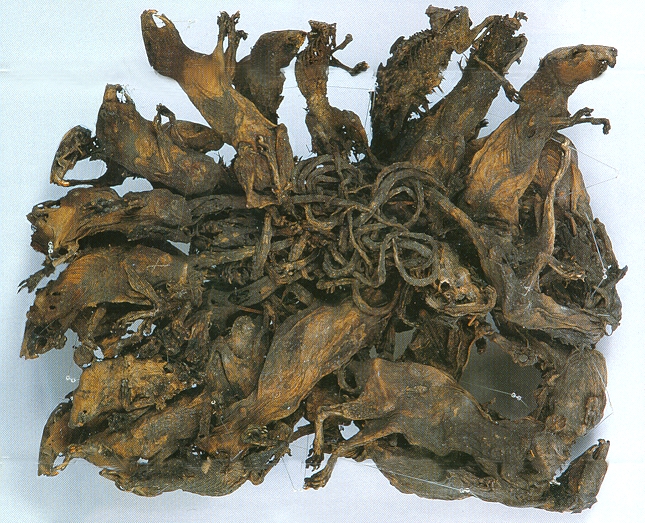
In naturalistic terms, the king of rats consists of a group of individuals, often young, whose tails are intertwined and permanently fixed. There are several hypotheses about the mechanisms behind this phenomenon: some scholars believe that natural adhesive materials such as resin, mud, excrement, hair, sebum, or blood present in the nest may be involved; others emphasize the role of environmental conditions, such as intense cold and frost, which stiffen and stick the tails together, or the confined spaces of the nests, where the rats’ bodies remain compressed; a further explanation focuses on anatomy and behavior, noting that tails, covered with scales and fine hairs, can easily become entangled, and that stress or convulsive movements aggravate the initial entanglement. Once stuck together, the animals are unable to separate without injuring themselves, and their survival depends on the food available, the protection offered by the nest, and the absence of predators. In most cases, unless an external factor intervenes, the outcome is death from starvation, infection, or injury.
History and reported cases
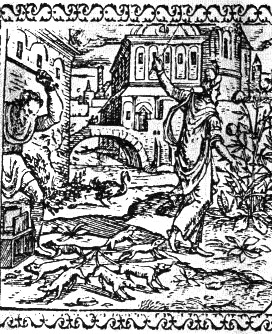
The oldest documented discovery of a rat king dates back to 1564. Since then, there have been very few cases: it is estimated that around 50 have been reported up to 2005, the last of which was on a farm in the Võrumaa region of Estonia. Some European museums preserve alleged historical specimens, mummified or preserved in alcohol: among the best known are those in Germany, the Netherlands, and France.
Many reports concern the black rat (Rattus rattus), once widespread in European human settlements, now largely supplanted by the gray rat (Rattus norvegicus).
Authenticity and skepticism
Zoologists are divided. On the one hand, it is plausible that some specimens are fakes, obtained by knotting or gluing the tails of dead rats to create curiosities for display in cabinets of curiosities. Furthermore, from an ecological point of view, it is difficult to believe that a group of tied rats could survive for long.
On the other hand, some specimens show signs that suggest their authenticity: scars, calluses, and adhesions that can only form in living animals. Similar phenomena, such as the extremely rare “squirrel kings,” have been documented in modern times: young squirrels with tails glued together by conifer resin, sometimes rescued by veterinarians and rescue centers.
Why it seems more common in the past
In addition to the taste for curiosities in past centuries, biological and ecological factors also play a role: with the establishment of the gray rat in Europe, both nesting conditions and behavior have probably changed; higher hygiene standards and modern building structures have reduced the presence of dense, dirty nests, where the alleged “sticky” agents might be found. Furthermore, cases are now investigated with greater scientific rigor, putting many testimonies into perspective.
Ethical and practical implications
If you encounter a possible ‘rat king’, it should be left to wildlife services or veterinarians to deal with. Attempting to separate the animals without expertise can cause pain, fractures, and infections. The ethical choice depends on the condition of the animals: in some cases, veterinary intervention is possible; in others, it may be necessary to alleviate suffering. In any case, it is best to avoid direct contact due to the risk of zoonosis and to call the relevant services.
In the collective imagination
The ‘rat king’ has become a powerful metaphor for an unmanageable tangle of problems, an inextricable mess. The image appears in news reports, stories, and pop culture, where it symbolizes decay, contamination, or fear of disorder. Its evocative power far exceeds its actual frequency in nature.
The ‘king of rats’ sits on the borderline between folklore and zoology: rare, very difficult to observe in an indisputable way, but not impossible. Some modern cases and the existence of similar phenomena in other rodents suggest that, under certain conditions, permanent tail entanglement can indeed occur. At the same time, the history of the phenomenon reminds us how easy it is, when faced with the surprising, to oscillate between credulity and skepticism.
The most useful lesson is methodological: document, analyze, contextualize. And recognize that, sometimes, the fascination of certain stories stems precisely from their ambiguity.
Help Emadion grow, click here.
Cover image: Rat King preserved at the Naturkundliches Museum Mauritianum in Altenburg (Germany), photographed in 2005. Image available under CC BY-SA 3.0 e GFDL 1.2 licenses.