 Posted by
 There are stories that seem destined to be told around a fire, on nights when silence invites memories and mystery. Stories that need no exaggeration, because their power lies in their very reality. The story of Hedviga Golik belongs to this category: an ordinary woman, an anonymous apartment, and a silence that lasted 42 years. This is not an urban legend, but a documented fact that shocked the public in 2008, when the door to her apartment was opened after decades, revealing a scene suspended between reality and the unbelievable.
Hedviga Golik, a woman like many others
We actually know very little about Hedviga Golik. She was a former nurse, originally from Rijeka, who lived in Zagreb, in the Medveščak neighborhood, near Gupčeva zvijezda square. Since 1961, she had lived in a small attic apartment of only 18 square meters, isolated from the rest of the four-story building. Her last job was at the community health center in Trešnjevka.
The apartment had been given to her by the building’s caretaker, Hinković, who had also been her partner and was, like her, a Jehovah’s Witness. It is said that Hinković had participated in the construction of the building and had received that very attic in exchange, which was then assigned to Hedviga.
She had a sister, a teacher in Zagreb, with whom she had broken off relations after several arguments. Her neighbors remember her as an eccentric woman, prone to mood swings: she alternated between moments of silence and total withdrawal and sudden outbursts of anger. Katica Carić, a neighbor who occasionally ran errands for her, said that Hedviga never spoke to anyone and didn’t even go out to do her shopping. She would lower a bucket with money and a shopping list down the stairs and demanded that the bags be left outside her door.
Some thought she suffered from schizophrenia because of her frequent screaming and unusual behavior. She often disappeared for long periods of time, during which she rented her apartment to others. According to Carić, the last time he saw her was on a day when she was in the company of two or three young men: the year remains uncertain, varying between 1963, 1967, or even 1973, depending on the source.
She is thought to have died around 1966, possibly from a sudden illness, while she was in her apartment. She left no messages and asked for no help. Time stopped for her at that moment, and no one has heard from her since.
The long silence
The most enigmatic part of the story is not so much Hedviga’s death as the fact that, for forty-two years, no one ever felt the need to actually look for her. Her neighbors thought she had left, perhaps moving to another city. Some speculated that she had gone to live with relatives, others that she had joined a community or a sect. There was no shortage of conjecture, but the truth is that no one went to check.
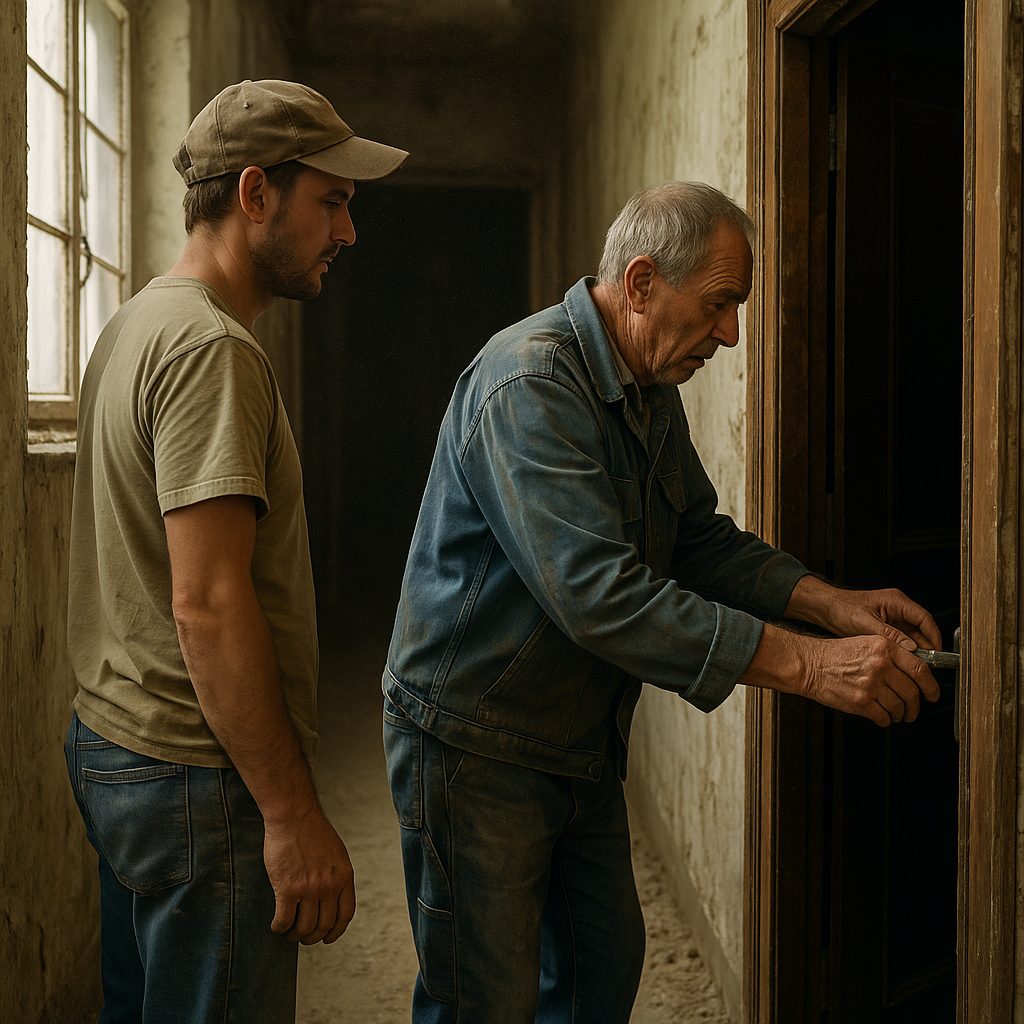
Her apartment contributed to the mystery: it was not her property, but belonged to an architect who continued to pay the bills. Thanks to him, the electricity remained on for decades, avoiding suspicion. When the architect also died in 2008, his heirs decided to renovate the building and rent out the spaces again. It was only then that the door, which had remained closed for more than four decades, was finally unlocked.
The discovery of 2008
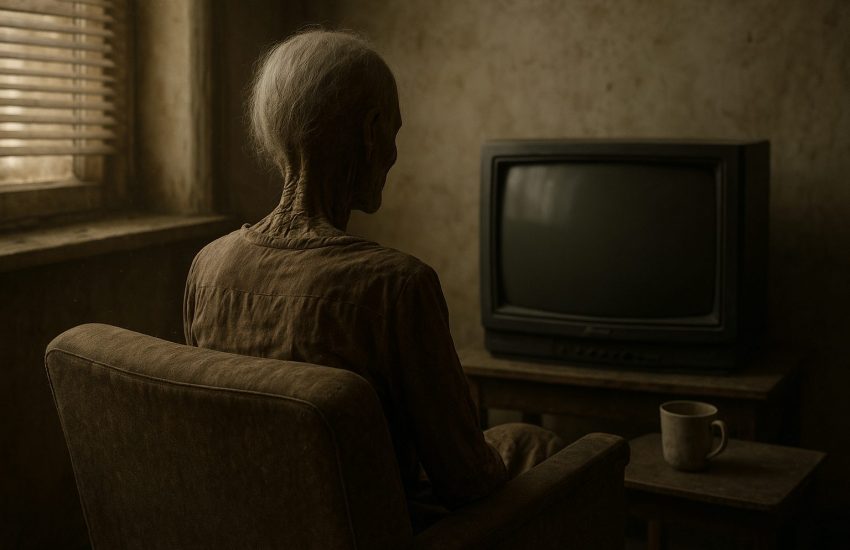
Those who entered the apartment that morning in 2008 were speechless. In front of them, sitting in an armchair, was the body of Hedviga. It had not been reduced to bones, as one might expect after so many years, but had been naturally mummified. The small, dry, sealed room had preserved her remains almost intact, giving those who entered the feeling that time had truly stood still.
The scene was surprisingly ordinary, and precisely for this reason disturbing. On the coffee table was a cup of tea, as if she had been suddenly interrupted in a daily routine. In front of her, an old television set, turned off for decades, bore witness to the normality of that last evening. There were no signs of violence, nor any clues to suggest anything other than a natural death. However, the autopsy, performed later, failed to establish the exact cause of death or the exact date.
A life vanished into indifference
Hedviga’s story is striking not only because of the mysterious preservation of her body, but above all because of the human drama it represents. How is it possible for a person to vanish into thin air without anyone really looking for them? What happened to her friends, relatives, and colleagues? Her absence went unnoticed for over forty years, in a silence that says more than a thousand words about the loneliness and indifference that sometimes surround everyday lives.
After the discovery, Croatian newspapers emphasized this very aspect: Hedviga Golik became the symbol of a forgotten woman, whose life had not left enough traces to be remembered until the case brought her name back into the limelight.
A symbol of collective memory
Today, the story of Hedviga Golik continues to circulate on the web and on social media, but beyond the media impact, the symbolic value of this story remains. Hedviga is not just a name linked to a mystery, but represents a deeper question: how much of us remains when the memory of others fades? And how long does it take for a life to be forgotten? In Hedviga’s case, the answer was very little. Today, however, her memory has been revived, transforming the silence that had enveloped her into a story that still intrigues and fascinates us.