 Posted by
 Photo by Paul Hudson with license CC BY 2.0.
In the heart of the Utah desert, behind closed doors and far from the media spotlight, an expert hand slowly rubs a waxy ointment onto the pale face of a body. The deceased is not awaiting a funeral. No. This body will be prepared for a new “life.” A life made of display cases, shiny skin, and eternal silence. Welcome to the world of modern mummification, where the ancient art of the Egyptians meets American capitalism and the thirst for immortality. In an age where everything is becoming dematerialized, there are those who pay thousands of dollars to remain physically intact, defying decomposition, the law, and sometimes even common sense.
But who are these new pharaohs of the third millennium? And what drives them to want to remain present even after death?
The ancient obsession with preserving the flesh
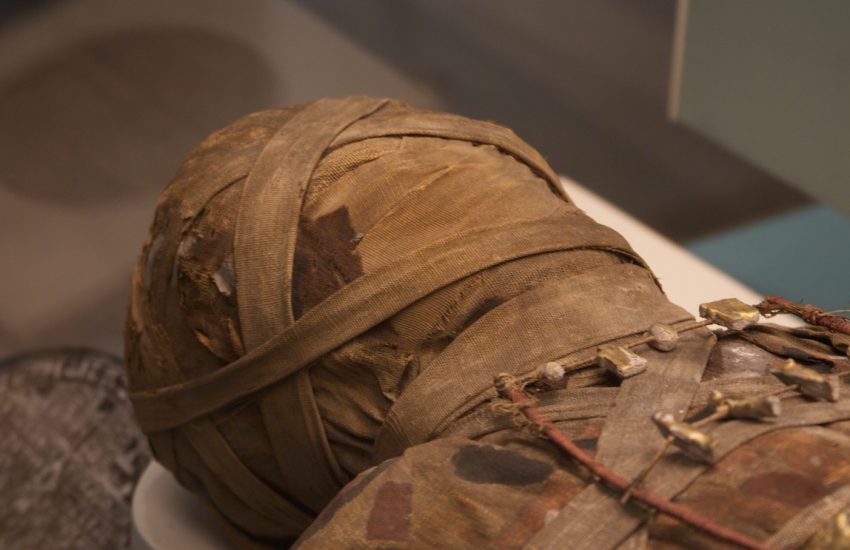
Mummification is probably one of the most fascinating and disturbing funeral rituals in history. Used as early as 5,000 years ago in Egypt to accompany the pharaohs into the afterlife, it responded to a single obsession: the permanence of the body. In Egyptian religious belief, the soul could only return to the body if it remained intact. This led to the development of increasingly sophisticated techniques for emptying, drying, embalming, and packaging corpses. Over the centuries, the idea of preserving the body has also seduced other cultures: Catholic saints displayed in glass cases, the plastinated bodies of modern science.
But today, this obsession has not faded at all. On the contrary, it has been transformed into a luxury service, complete with glossy brochures and price lists.
The new embalmers: who offers mummification today?
It is no longer the priests of Anubis who offer mummification as a real service, but modern companies. The most famous is called Summum, based in Salt Lake City, founded by Claude Nowell (also known as Corky Ra), who proclaimed himself high priest of a syncretic and mysterious religion. His church offers a complete service: from preparing the body using secret techniques to burial in ‘personalized sarcophagi’. The price? It starts at over $60,000.
According to the little information that has been leaked, the process involves the removal of internal organs, dehydration of the body using chemical and natural substances (based on resin, salt, and alcohol), and a long phase of cosmetic treatments to ensure a “sleeping” appearance. The end result is a body that appears intact, with taut, shiny skin, closed eyes, and hands clasped together. Not just a simple embalmed corpse, then, but a personal icon of eternity.
Eccentric customers and real cases
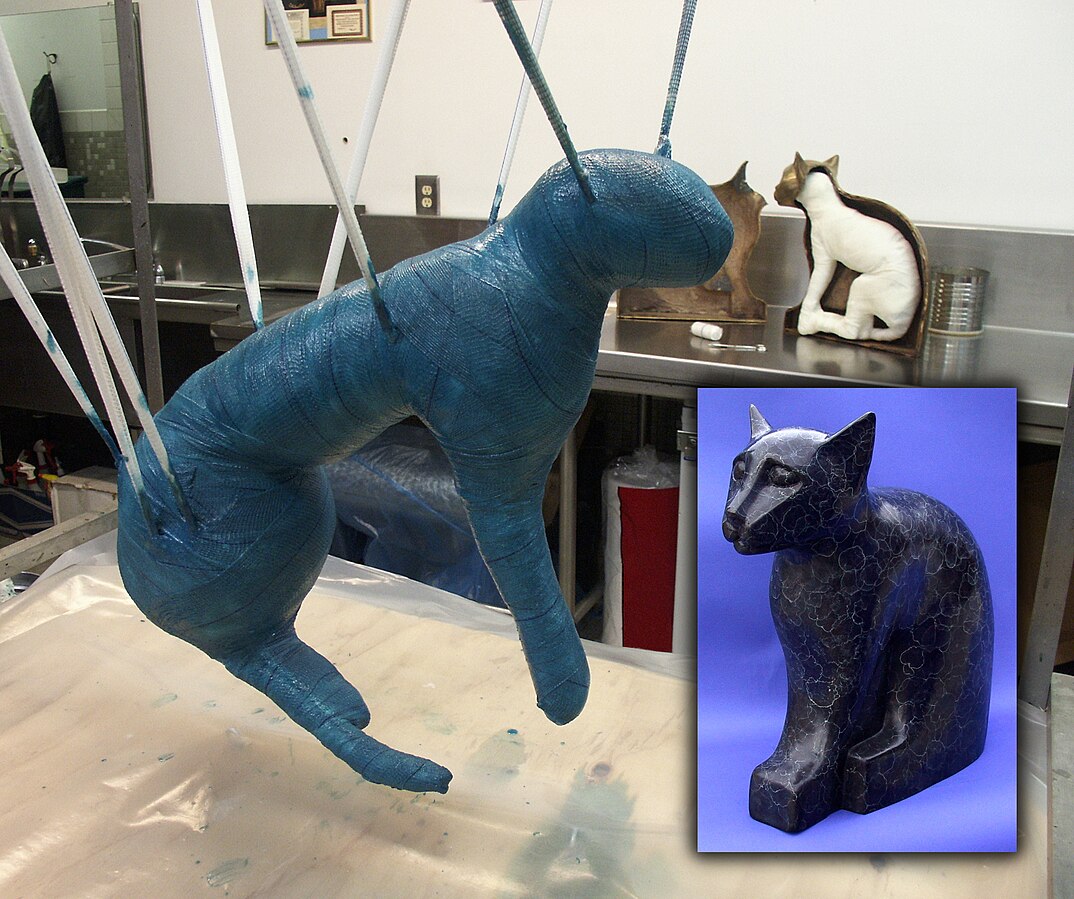
Who are the people choosing to be mummified in 2025? Not only followers of the Summum religion, but also wealthy, lonely, or image-obsessed individuals. Some want their bodies to be displayed in their family homes. Others wish to be preserved alongside cherished objects, including mummified pets.
One of the most famous cases is that of Summum founder Corky Ra, who was mummified in 2008 and is preserved in a display case visible only to the most loyal members of the cult. Another case reported by American sources concerns a woman from Arizona who arranged for her mummified body to be placed in her living room, standing upright, wearing a pink dressing gown and holding a bouquet of fake flowers.
Sounds like a horror movie? Perhaps. But it’s all real. And, at least in the United States, perfectly legal.
Law, ethics, and religion: is my body mine to keep?
Unlike cryopreservation, which has sparked controversy and resistance on medical and ethical grounds, modern mummification exists in a legal gray area. In many US states, it is legal to dispose of one’s body after death in unconventional ways, provided that no health hazard is created. Some families even manage to obtain permits to keep the body at home. In other countries, however, mummification is prohibited or considered abuse of a corpse.
Traditional religions, on the other hand, are generally hostile. For Christianity, artificial preservation of the body has no spiritual value. For Islam and Judaism, it is even seen as a violation of the body, which must return to the earth as soon as possible. Yet this does not stop those who see mummification as an act of post-mortem freedom, a statement of identity, or an extreme gesture against oblivion.
When death becomes a piece of furniture
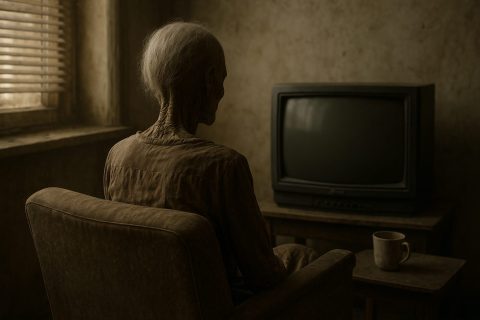
The line between homage and fetishism becomes blurred. In some rural communities, especially in the southern United States, disturbing cases of DIY mummified bodies have emerged, kept in homes, dressed every day, made up, and seated on the sofa as if nothing had happened. One such case involves an elderly man who lived for over six years with his mummified wife in his living room, next to his favorite spot. Upon discovery, authorities declared that the body was surprisingly well preserved thanks to homemade methods involving formalin, alcohol, and constant ventilation.
Other cases involve dogs, cats, and even mummified children preserved by their parents. In one extreme case, a woman was found living with the embalmed body of her son, who had been dead for years, dressed in new clothes every day.
A new religion of immortality?
Ultimately, modern mummification is nothing more than a secular religion of the ego. The body becomes a temple, an idol, a relic. A permanent monument to oneself. In a world where death is removed from view, reduced to hygiene practices and bureaucracy, mummification stands out as a provocative act: I am staying here, and I want you to look at me.
It is no coincidence that those who choose this fate have often been lonely in life or linked to alternative spiritual movements. Mummification is a way of asserting control even beyond death. But it is also, in some ways, a tragic declaration of despair. As if the body, if well preserved enough, could resist oblivion.
The chill of eternity
Modern mummification is the most visible and disturbing aspect of humanity’s long battle against the inevitable. In an age that idolizes youth and shuns decay, the idea of remaining immobile, eternal, frozen in one’s own body is an illusion that many pay dearly for.
But in the end, even the shiniest skin will crack. Even the most expensive sarcophagus will rust. And perhaps what really survives is not the body we leave behind,
but the emptiness we carry with us.