 Posted by
 In the dark depths of macabre art, few works can boast a story as compelling as that of Masakichi’s statue.
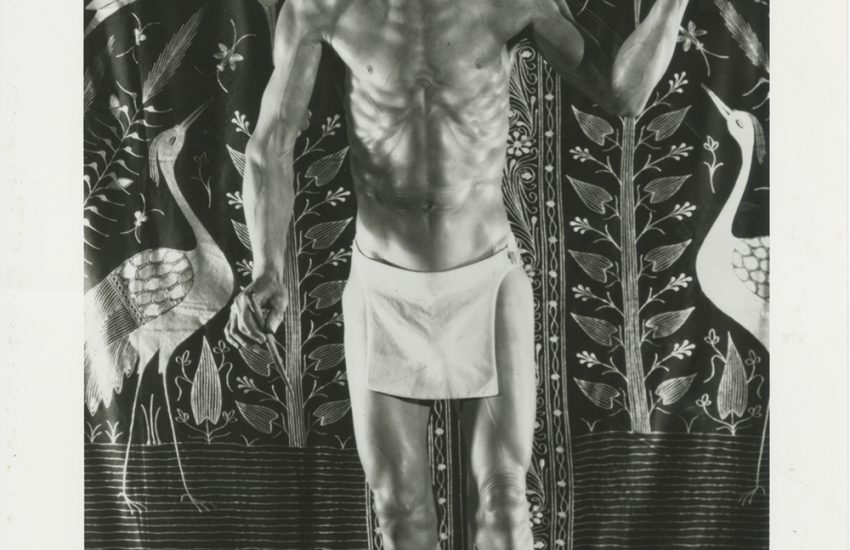
Hananuma Masakichi, a talented 19th-century Japanese sculptor, was a man destined to become a legend. When misfortune knocked on his door in the form of an incurable illness, his ardent and desperate love for a woman drove him to an extreme decision. He longed to create a work of art so real, so lifelike, that it could take his place in his beloved’s heart after his inevitable death.
And indeed, when he posed beside it, people struggled to tell who was the man and who was the work of art.
A dark creation
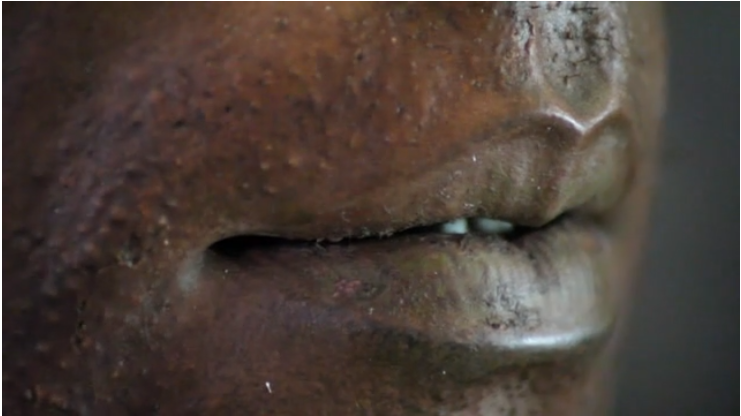
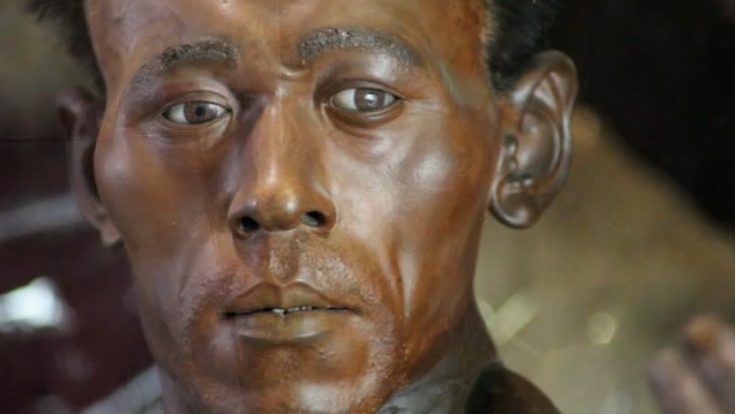
For three long and tormented years, Masakichi was obsessed with creating a perfect replica of himself. The artistry of Masakichi’s statue lies in its astonishing precision and realism, the result of a painstaking and meticulous process. Using his own body as a model, Masakichi studied himself intently through a series of mirrors, devoting countless hours to carving every detail. The statue is not carved from a single block; every detail was carved onto small pieces of wood, which were then joined without nails using dovetail joints and glue. Every vein, fold, and wrinkle of the skin was recreated with maniacal obsession.
But what made the statue so unsettling in its authenticity were the personal details the artist incorporated: his own hair was implanted onto the sculpture’s skull, the pores carved one by one with corresponding hairs implanted on the statue, and it is said that he even gave the statue his own fingernails, tearing them out, and his teeth.
This almost masochistic dedication to his art transformed the statue into something more than a mere representation; it became a fragment of his very essence, a hybrid of wood and man that continues to inspire both dread and admiration.
Masakichi, in his wooden form, seems alive; every vein, crease, and imperfection of the skin is rendered with almost unnatural precision. Eventually, he carved and painted glass eyes virtually identical to his own, as well as a pair of glasses.
But the true horror lies in the reason for its creation: a tribute to his beloved, an eternal representation of his love, destined to last far beyond death.
Masakichi Statue – the idea behind the creation
Behind the creation of his statue lies a love story as intense as it is tragic. Hananuma Masakichi, suffering from an illness he believed to be fatal, was overwhelmed by the thought of leaving his beloved alone in the world. Consumed by the idea of his imminent passing and driven by a burning desire never to be forgotten, he decided to sculpt a perfect replica of himself. This was not merely an artistic gesture, but an offering of love: he wanted to leave her an “eternal” version of himself, a tangible presence that could replace his physical absence. Thus, every carved detail, every implanted hair, every nail and tooth incorporated into the statue, was a message of love and eternity for his beloved, a way to ensure that his presence would remain by her side, in some form, forever.
A painful rejection
But as in every story of love and obsession, there is a tragic twist. After all the effort and pain that went into its creation, the woman for whom it was intended rejected it. Unable to bear the sight of that all-too-real replica, she left Masakichi and his “creation” to a fate of solitude.
The artist did not die of tuberculosis, but survived another ten years, dying in poverty in 1895. The statue has come down to us thanks to the famous collector Robert Ripley, who purchased it for just $10. Today, this eerie testament to love resides in the Ripley’s Believe It or Not! museum in San Francisco. A warning to anyone who dares to challenge the boundaries of love, life, and death.
The statue of Masakichi reminds us that the most unsettling stories can arise from human truths and earthly passions. A creation that, in its strange and macabre beauty, continues to torment and fascinate anyone who meets its gaze.
Photo credit: https://www.ripleys.com/