
 Posted by
The Iron Maiden of Nuremberg is perhaps the most famous “medieval” torture device in the world: an iron coffin lined with spikes. The problem is that, in all likelihood, it never existed in the Middle Ages. Its story begins at the end of the 18th century, and the museum examples were built in the 19th.
Search for “medieval torture devices” online and the first picture you see is almost always this one: a sort of iron cabinet shaped like a woman, with two doors lined with long spikes on the inside. The Iron Maiden of Nuremberg.
Today I am going to tell you its whole story. Because the story of the Iron Maiden is the story of a torture that was probably never used, yet became more famous than all the real ones.
What the Iron Maiden looked like
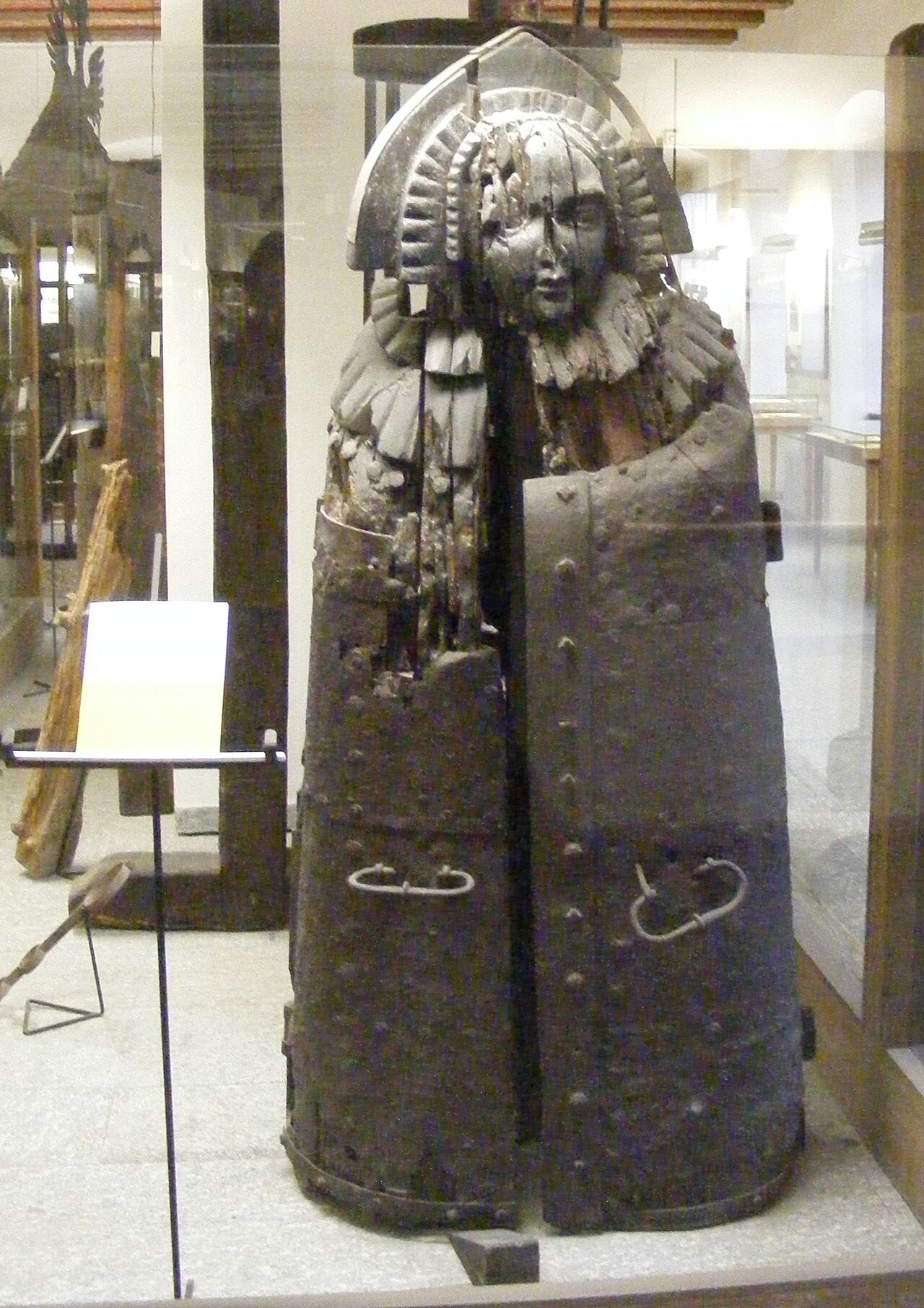
In the classic description, the Maiden was an iron sarcophagus tall enough to hold a standing person. The top often had the shape of a woman’s face, sometimes with a cloak or a bonnet, like a statue of the Virgin Mary or a lady of the time.
The front opened with two hinged doors. Inside were long iron spikes. The prisoner was made to step in and the doors were slowly closed, driving the spikes into the body. In the more “refined” versions of the story, the spikes were placed to miss the vital organs, so the victim would die slowly, bleeding to death, standing up in the dark.
It is the perfect description for a horror film. And that is exactly the point.
A torture without records
Historians have spent centuries looking for evidence that the Iron Maiden was used in the Middle Ages. They have never found it.
There are no sentences, no accounts of executions, no descriptions in court manuals. The device simply does not appear in any document before the late 18th century. In an age when courts recorded with obsessive precision how many blows a prisoner should receive (as we saw with the breaking wheel), that silence says a lot.
The man who invented its story
The first person to tell the story of the Iron Maiden of Nuremberg was a German professor and philosopher, Johann Philipp Siebenkees, who lived from 1759 to 1796. According to him, the Maiden was first used on 14 August 1515 to execute a coin forger.
The problem is that Siebenkees cites no reliable source. Many historians now believe his tale was romanticised, or even made up from scratch, at a time when the Middle Ages were being portrayed as a dark and cruel era full of horrors.
How the museum Maidens were born
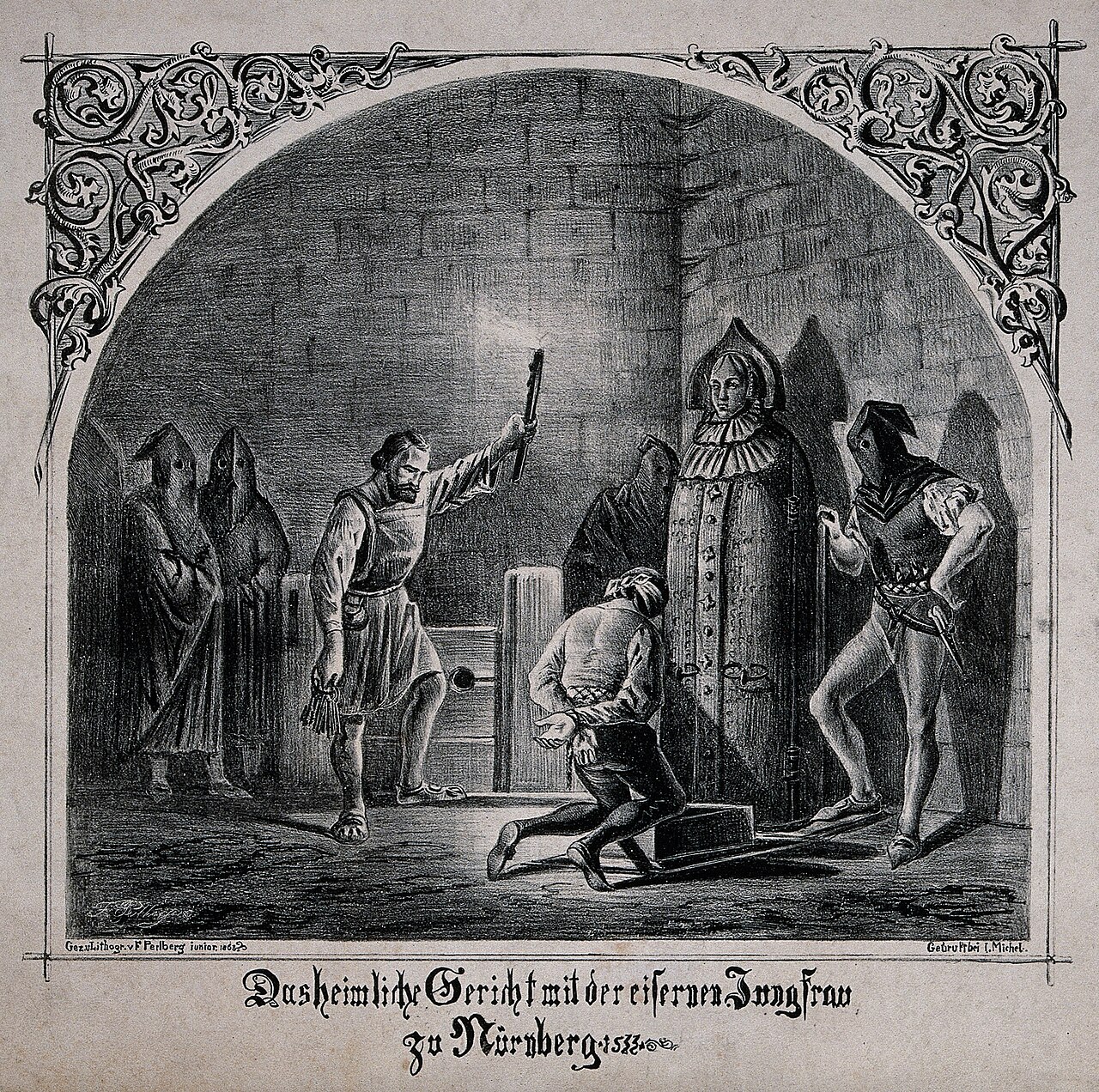
So where do the iron maidens we see in museums come from?
The most famous was the Nuremberg one, which may have been on display as early as 1802. In the 19th century it became an attraction: people queued to see it and shiver. It was destroyed in the Allied bombing of Nuremberg in 1945.
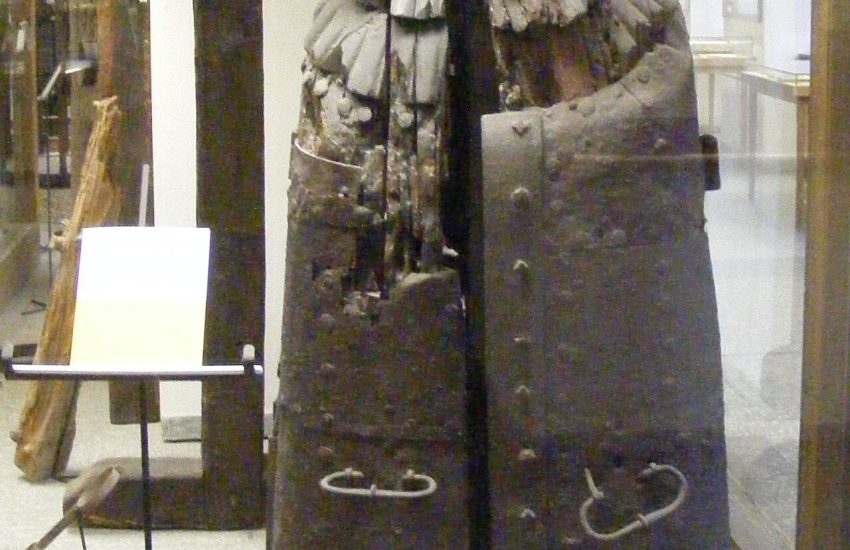
A copy, presented as coming “from the Royal Castle of Nuremberg”, was sold in 1890 by a London dealer to the Earl of Shrewsbury along with other torture devices. It was shown at the 1893 World’s Columbian Exposition in Chicago and then taken on tour around the United States. In the 1960s it was auctioned, and today it is in the Medieval Crime Museum in Rothenburg ob der Tauber, Germany. It is the one in the photo at the top of this article.
According to Wolfgang Schild, a professor of the history of criminal law at Bielefeld University, many iron maidens were “assembled” by combining different pieces found in museums, to create spectacular objects to show (and charge) the public. It was the age of the horror museum, and a spiked coffin drew far bigger crowds than an old rope.
The cloak of shame
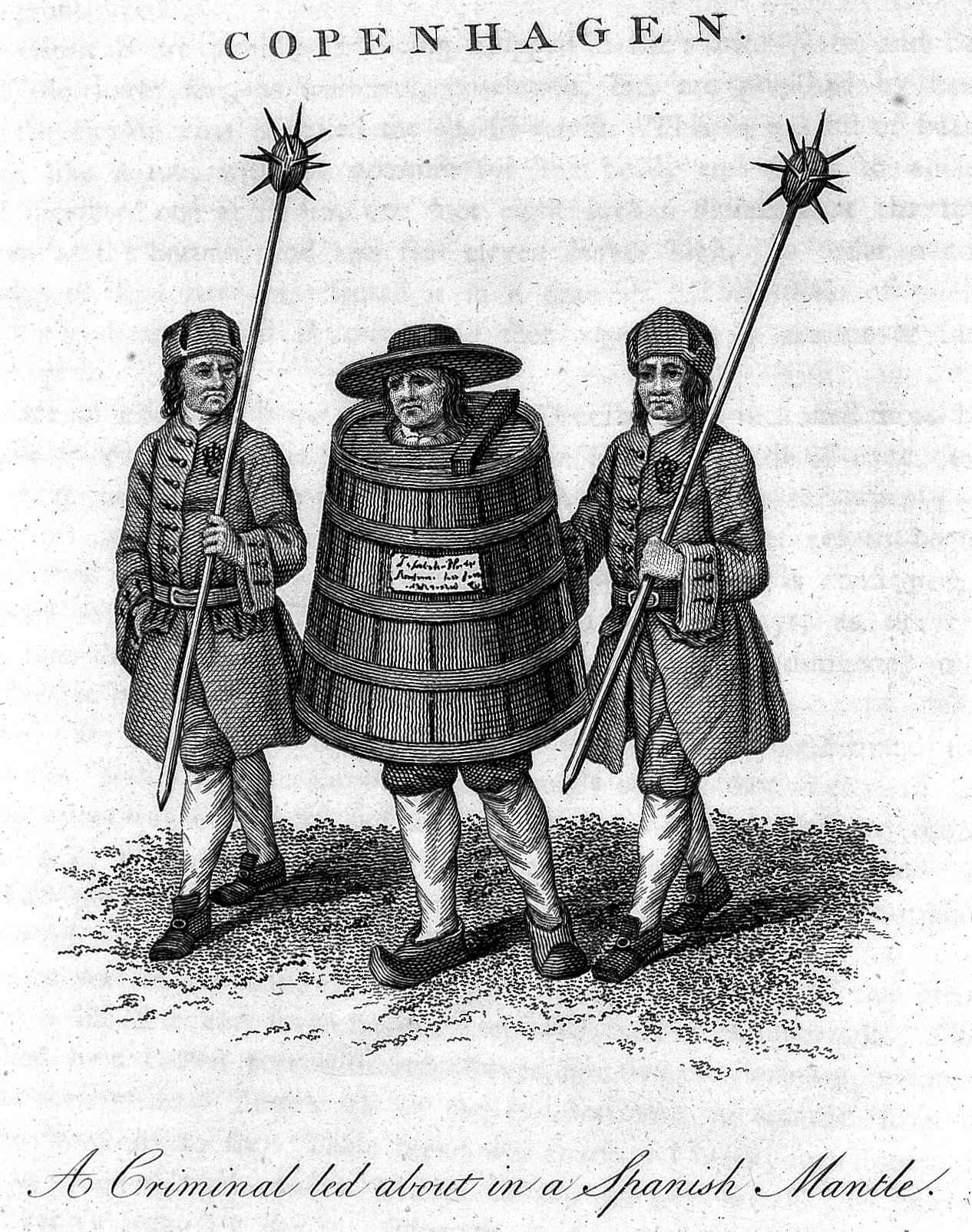
There is a very interesting theory about what inspired the Maiden. In medieval Germany there really was a similar object: the Schandmantel, or “cloak of shame”.
It was a kind of barrel or wooden cylinder, sometimes with metal parts, that the convicted person had to wear while being paraded through town. It was used for minor offences, such as drunkenness or brawling in public. It was uncomfortable and humiliating, but it had no spikes and killed no one.
It is possible that, centuries later, someone saw one of these cloaks in an old storeroom and “reinterpreted” it as an instrument of death, adding the spikes.
Ancient precedents
None of this means that nobody ever thought of shutting a person in a container full of spikes. In fact, there are several similar stories from antiquity.
The Greek historian Polybius writes about Nabis, tyrant of Sparta around 200 BC, who supposedly built a statue in the likeness of his wife, Apega, with iron spikes hidden under its clothes. Anyone who refused to pay was “embraced” by the statue. Tertullian and Saint Augustine, for their part, tell how the Carthaginians killed the Roman general Marcus Atilius Regulus by shutting him in a wooden box studded with nails.
And in the 9th century the Abbasid vizier Ibn al-Zayyat is said to have built a sort of wooden oven with iron spikes inside to torture his enemies. Ironically, in 847 he ended up dying in it himself.
These stories are hard to verify, but they show that the idea existed. What is missing is proof that the Iron Maiden of Nuremberg, as we know it, was ever used in medieval Europe.
A fake torture that is truly frightening
None of this stopped the Maiden from becoming an icon. It appears in films, comics, video games and haunted houses. A world-famous British heavy metal band is named Iron Maiden. Legend also links it to Countess Elizabeth Báthory, who supposedly used it to kill her victims, though there is no evidence for that either.
Unfortunately, some people took it seriously. According to several accounts, Uday Hussein, Saddam’s son, had one built in the 1990s. And in 2014 Congolese soldiers reportedly seized one in a camp belonging to the armed group ADF.
A torture born of fantasy, then, that in the end someone decided to make real.
Sources
- Iron maiden, Wikipedia
- Eiserne Jungfrau (German), Wikipedia
- Schandmantel (German), Wikipedia
- Wolfgang Schild, Die eiserne Jungfrau. Dichtung und Wahrheit, Mittelalterliches Kriminalmuseum Rothenburg, 2000
Images: photo by Mattes, public domain; two illustrations from the Wellcome Collection, CC BY 4.0. Via Wikimedia Commons.


