
 Posted by
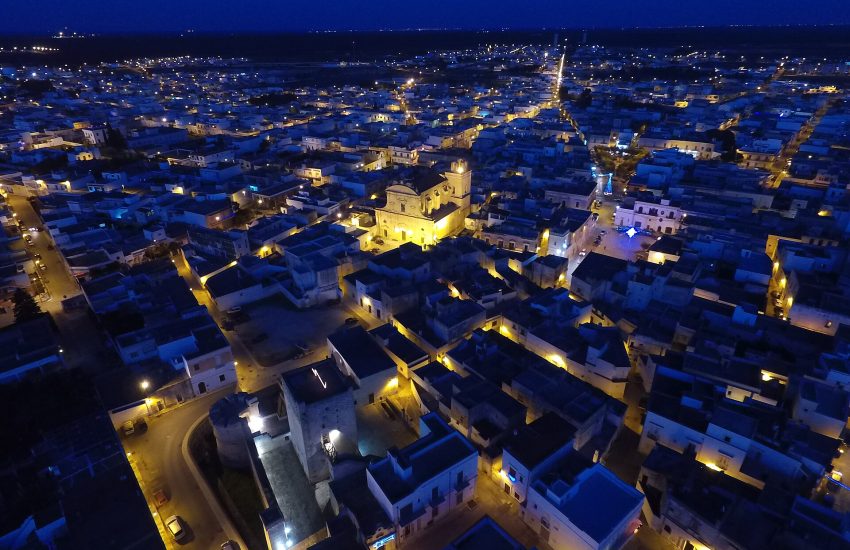
It is a late August afternoon in Salento, in the heel of Italy. The asphalt is scorching, the shutters are down, the town is almost still. A fifteen-year-old girl leaves home: she is going to her cousin’s house, because later that afternoon they are heading to the beach. She walks a few steps through the streets of Avetrana, a town of about six thousand people in the province of Taranto. Then she vanishes.
Her name was Sarah Scazzi. For forty-two days the whole of Italy looked at her photo, listened to her family’s appeals and followed every theory live on television. When the truth came out, it came in the cruellest possible way: from inside her own family, and in front of the cameras.
Who Sarah was
In the summer of 2010 Sarah Scazzi was fifteen. She lived in Avetrana with her mother, Concetta Serrano; her father Giacomo and her brother Claudio worked in the north of Italy, like many men from the south. She was a shy girl, living the life of many small-town fifteen-year-olds: school, her phone, the social networks that were just entering people’s homes in those years, summer evenings with the older kids.
Her point of reference was her cousin Sabrina Misseri, 22, the daughter of her mother’s sister. Sarah spent a lot of time at the house of her aunt and uncle, Cosima Serrano and Michele Misseri, on Via Grazia Deledda, a few hundred metres from her home. She went out with Sabrina, spent time with her group of friends and followed her the way you follow an older sister.
The evening before: the quarrel
To understand what happened on 26 August, we have to go back to the previous evening. According to the reconstruction in the verdicts, Sarah had confided to her brother Claudio a private episode involving Sabrina and Ivano Russo. Word had got around. On 25 August, in town, in front of other young people, Sabrina confronted her cousin and humiliated her with harsh words.
For a fifteen-year-old who saw Sabrina almost as an older sister, it was a heavy blow. For the judges, it was the start of what they would call an “emotional short circuit”: a resentment that, within a few hours, would turn into something irreparable.
26 August, minute by minute
On the morning of 26 August Sarah was again at the Misseri house: relations between the cousins were tense, but she kept going to the house on Via Deledda. At midday she went home, did some shopping and changed. In the early afternoon she set off back to her aunt and uncle’s: she was supposed to go to the beach with Sabrina and a friend, Mariangela Spagnoletti. The two houses are about six hundred metres apart, a few minutes’ walk. Some people saw her walking along that street.
From here on, times become crucial, because they are the times recorded by the phones.
- 2:23 p.m. – Mariangela texts Sabrina that she is on her way. Sabrina replies asking whether she should let Sarah know.
- 2:25 and 2:28 p.m. – Sabrina sends two texts to Sarah.
- 2:28 p.m. – A call is made from Sarah’s phone to Sabrina’s. According to investigators, it was not Sarah who made it: it was a way of building an alibi.
- 2:41 p.m. – Mariangela and her sister arrive at the house. Sabrina is not waiting on the veranda as usual, but is already out in the street.
- 2:42 p.m. – Sabrina calls Sarah: no answer. Two minutes later the phone is switched off.
Sabrina tells her friends she never saw her cousin arrive. “They’ve taken her,” she keeps saying. Shortly afterwards Sarah’s mother raises the alarm.
In the first hours nobody fears the worst: a fifteen-year-old in summer might be at a friend’s house, or might have run off after an argument. Sabrina joins the searches, talks to journalists and appears on television next to her aunt, asking anyone who knows anything to come forward.
Forty-two days on television
In the weeks that followed, Avetrana turned into a film set. Satellite vans parked in front of houses, reporters broadcasting live at all hours, afternoon and evening shows with regular slots devoted to “the missing girl”. Sarah’s mother and her cousin Sabrina spoke in front of the cameras. Sarah’s photo entered every home in Italy.
Meanwhile the theories multiplied. The carabinieri considered a runaway, then a man met online, then a dark car seen in town. Every day there was a new suspect, a new detail to analyse, a diary to read out on air. The town was divided between those who only wanted Sarah to come home and those who already had an idea about who “knew something”.
The phone in the olive grove
On 29 September her uncle, Michele Misseri, went to the carabinieri holding something: Sarah’s mobile phone, half burnt, without its battery or SIM card. He said he had found it by chance in an olive grove while looking for a screwdriver, and had recognised it by the little can-shaped charm hanging from it.
The story did not convince. In the previous days Misseri had already told two police officers that he had found the phone’s SIM card and then lost it. Investigators began to take a close look at him, the man who until then had stayed in the background, silent, while his daughter spoke on TV.
The night of 6 October
On 6 October 2010 Michele Misseri was questioned for about ten hours. In the end he broke down. He said he had killed his niece himself, in the garage of his house, by tightening a rope around her neck. As a motive he spoke of a sudden fit of rage: he was on edge, he said, because his tractor would not start. Then he led investigators to Contrada Mosca, in the countryside where he had lived as a young man.
There was an old well used as a water tank. Inside was Sarah’s body, covered by a large stone. It had been there for forty-two days, while the whole town was looking for her. Misseri explained that he had burned the girl’s clothes and belongings; the phone, however, he had kept.
That evening Sarah’s mother was a guest, via a live link, on Chi l’ha visto? (“Who has seen them?”), the Rai 3 programme about missing persons that had been following the case for weeks. The news of the confession and the discovery arrived while the show was on air. Millions of people watched, in real time, as a mother learned that her daughter was dead and that the person who had confessed was her brother-in-law.
That scene remains a wound in the history of Italian television. It was debated for years in newsrooms and journalism schools: could the broadcast have been stopped? Should it have been? It is still one of the most cited examples when people discuss the limits of live crime reporting.
On 9 October Sarah was buried in Avetrana’s cemetery, next to her maternal grandmother.
The rope, the belt and the seven versions
It seemed like the end of the story. It was only the beginning.
Even in the first statements something did not add up. Describing what happened after the killing, Misseri used the plural – “we parked” – and then corrected himself. The rope he said he had used was never found: according to his lawyer at the time, he had thrown it into a rubbish bin. Misseri also made extremely serious and degrading claims about what he had done after his niece’s death. The autopsy did not confirm them, and he himself eventually retracted them.
On 15 October came the turning point. In a new interrogation Misseri implicated his daughter: he said Sarah did not want to go down to the garage, that she was asking to go home, and that Sabrina held her with her arms while he tightened the rope, “just to teach her a lesson”, to frighten her. The next day, 16 October, Sabrina Misseri was detained on suspicion of complicity in murder.
From then on the versions chased each other: in some Sabrina was the only culprit, in others an accomplice, in others still he took all the blame himself. Investigators counted seven. Later Misseri would say that the accusations against his daughter had been “suggested” to him.
Meanwhile prosecutors were working on other evidence. The marks on Sarah’s neck were compatible with a belt, not a rope; the belt found in the garage did not match. There were no defensive wounds: according to the pathologist, someone was holding her still. Phone cell data showed that Sarah’s mobile stayed inside the Misseri house until shortly before 2:42 p.m., not in the garage. And that afternoon, according to his wife’s and daughter’s own statements, Misseri was at home, not out in the fields with his tractor.
The florist and the “dream”
In the autumn, a story began to circulate in town. Giovanni Buccolieri, a florist in Avetrana, had reportedly told friends and staff that on that afternoon he had seen a very specific scene: Cosima Serrano catching up with Sarah in her car, grabbing her by the hair and forcing her to get in, with Sabrina beside her.
Questioned by magistrates on 9 April 2011, Buccolieri retracted: he said he had only dreamt that scene. He was investigated for making false statements to prosecutors and in court he exercised his right to remain silent. It was other witnesses, including the mother of one of his employees, who told the judges what he had said.
The “florist’s dream” would become one of the most debated details of the case. For the prosecution it was a real memory, retracted out of fear. For the defence, a suggestion born in a town where everyone was talking about Sarah. In the end the judges relied above all on other evidence: a witness saw a car similar to Cosima’s on that street at a compatible time, and when the friends arrived, her car was parked in a different position from before.
What happened, according to the judges
On 26 May 2011 the carabinieri also arrested Cosima Serrano, Michele’s wife, Sabrina’s mother and Sarah’s aunt, on charges of complicity in murder and kidnapping. A few days later Michele Misseri was released from prison: the main charge left against him was concealing a body.
The reconstruction made final by the verdicts is this. Sarah arrived at Via Deledda, but something – perhaps a new clash with her cousin – made her leave. Sabrina and her mother caught up with her by car along the street, made her get in and took her back to the house. There, between 2:00 and 2:20 p.m., Sarah was strangled with an object compatible with a belt. According to the judges, the killers were her cousin and her aunt: one held her still, the other pulled tight.
Then the cover-up began. Sarah’s phone was used for the 2:28 p.m. call. The body was moved to the garage. Sabrina went out into the street to wait for her friends as if nothing had happened. Michele Misseri loaded the body into his car and took it to the well in Contrada Mosca; according to the verdicts, he was helped to hide it by his brother Carmine, whose conviction is final, and by a nephew, Cosimo Cosma. The next day Sabrina and Cosima went back to that area of countryside: they said they needed to check on a vineyard, but the judges did not find the explanation convincing. In the following weeks Sabrina described to a friend what Sarah had been wearing that day, a detail that, according to the prosecution, only someone who had seen her could have known.
The motive, for the court, was not only jealousy over Ivano Russo. It was also the “need”, in a family very concerned with appearances, to punish the girl who had spread a rumour and to protect the daughter’s image.
The trials: three levels, the same answer
The first trial opened on 10 January 2012 before the Court of Assizes in Taranto. The town of Avetrana joined as a civil party. In court, in December 2012, Michele Misseri again claimed he alone was guilty. The judges did not believe him.
On 20 April 2013, after 15 months and 52 hearings, the verdict came:
- Sabrina Misseri: life imprisonment for murder.
- Cosima Serrano: life imprisonment for murder.
- Michele Misseri: 8 years for concealing the body.
- Lesser sentences for other defendants, including Michele’s brother, Carmine Misseri, for helping to hide the body, and several people charged with aiding and abetting or giving false testimony.
On 27 July 2015 the Court of Assizes of Appeal upheld the life sentences and Michele’s eight years. On 21 February 2017 the Court of Cassation, Italy’s highest court, closed the case: the sentences became final. In its reasoning the court described Sabrina as a cold planner and stressed that the crime, as it unfolded, required two people.
In the following years there was a second strand of proceedings, on false testimony and misdirection, with eleven convictions at first instance in 2020, later cancelled in 2021 because the offences had become time-barred. Sabrina and Cosima’s defence also turned to the European Court of Human Rights, which declared the application inadmissible in November 2024.
After the verdict: a legal truth and a voice that won’t stay silent
On 11 February 2024 Michele Misseri left Lecce prison early, thanks to sentence reductions for good conduct. He went back to live in the house on Via Deledda, the same place where, according to the judges, Sarah was killed. The mayor of Avetrana publicly asked that the “media circus” not start up again. It partly did anyway: Misseri gave interviews and kept repeating that he alone was responsible.
Sabrina Misseri and Cosima Serrano, on the other hand, are serving life sentences, according to the latest available reports. Their long-time lawyer, Professor Franco Coppi, has never stopped proclaiming their innocence and has repeatedly spoken about the possibility of seeking a review of the trial. For the Italian justice system, however, the case is closed: the legal truth is the one established at three levels of judgment.
This gap between what the verdicts say and what one of the protagonists keeps saying has fuelled TV programmes, podcasts and online debate for years. And this is where we need to be careful: reopening everything every time someone speaks in front of a camera is not “searching for the truth”. Often it is just another ride on the merry-go-round.
This Is Not Hollywood
In October 2024 Disney+ released a miniseries about the murder directed by Pippo Mezzapesa. The announced title was Avetrana – Qui non è Hollywood (“Avetrana – This Is Not Hollywood”), but the town’s mayor, Antonio Iazzi, went to court to ask for its release to be suspended: he did not want Avetrana’s name to be tied forever to a murder. The series came out as Qui non è Hollywood, without the town’s name.
That says a lot. Fourteen years later, an entire community still felt the need to defend itself from a label. And the series’ title is itself a bitter comment: what happened in Avetrana was not fiction, but for months it was treated as if it were.
Reflections: what Avetrana showed us
Grief as entertainment
The Scazzi case was not the first major crime story followed by Italian television: before it came Cogne, Erba, Garlasco and Perugia. But Avetrana took that model to the extreme. During the weeks of searching, television did not just report: it took part. Family members were regular guests, reporters lived in the town, every detail was commented on by experts in the studio.
In those months the website of a major newspaper even ran an online poll asking readers whether the cousin was involved. 74% said yes. On a talk show, a scale model of the house appeared, complete with miniature palm trees. Journalist Stefano Nazzi wrote as early as October 2010 that the story had become a game of guessing the culprit, and simply urged everyone to leave Avetrana alone.
The problem is not telling the story of a crime. The problem is when the story becomes a format: with episodes, plot twists, good and bad characters. At that point the victim disappears a second time. Sarah, a fifteen-year-old girl, becomes “the Avetrana case”.
Onlookers at the gate
In October 2010 the then mayor signed an order closing the streets around the Scazzi and Misseri homes. Coaches were expected from other regions, full of people who wanted to see the house, the garage, the countryside where the well was. In June 2011 a couple on holiday in Salento rang Michele Misseri’s intercom to ask for his autograph. There were even Carnival costumes inspired by him.
At Emadion we often write about “dark tourism”: visiting places linked to death and tragedy. It can be a way to remember and understand, as happens at memorials and historic sites. But there is a huge difference between visiting a place of remembrance and stopping to take a selfie outside a house where a family still lives, days after a funeral. In those months Avetrana showed the worst version of this phenomenon.
The family and the town
The hardest part of this story to accept is that, according to the verdicts, the danger to Sarah was not a stranger. It was inside the house where she felt safest. Statistics have confirmed this for years: most violence against women and girls happens within the family or among people they know.
Then there is the town. For years Avetrana was described as closed, secretive, almost a villain in the story. That is an unfair simplification. A town of six thousand people found itself at the centre of a national circus without choosing it, and many of its residents spent years feeling ashamed of a name. The mayor’s battle over the series’ title should also be read in that light.
And us?
Perhaps the most uncomfortable question concerns the audience. The live broadcasts existed because ratings were sky-high. The polls existed because people voted. Every time a crime story becomes a series to follow, part of the responsibility also lies with those who watch. Remembering Sarah with respect also means asking ourselves what we are looking for when we follow a story like hers.
Sarah, first of all
Sixteen years have passed since that August afternoon. Today Sarah would be over thirty. She could have lived far from Avetrana or stayed there, had an ordinary job, an ordinary life. Instead her name remains tied forever to a well in the countryside, a courtroom and a live TV broadcast.
Perhaps the fairest way to tell this story is to remember that, before she was “the Avetrana murder”, she was a fifteen-year-old girl on her way to the beach.
Sources
- Murder of Sarah Scazzi – Wikipedia
- Sarah Scazzi, dall’omicidio alla Cassazione: le tappe del processo – Sky TG24
- Top court upholds life terms for Scazzi murder – ANSA
- Omicidio Sarah Scazzi, la Cassazione: “Sabrina fredda pianificatrice” – Sky TG24
- Il delitto di Avetrana: la ricostruzione dell’omicidio di Sarah Scazzi – Fanpage
- Sarah Scazzi, il verbale della confessione di Michele Misseri – Sky TG24 (2010)
- «Sarah uccisa da Sabrina e Cosima» – Avvenire (2011)
- Avetrana, il sindaco ferma i “turisti” – Avvenire (2010)
- Chiedono l’autografo a Michele Misseri: turismo dell’orrore ad Avetrana – Fanpage (2011)
- Venite via da Avetrana, tutti – Stefano Nazzi, Il Post (2010)
- Misseri verso la libertà, il sindaco: non sia nuovo circo mediatico – Espansione TV (2024)
- Omicidio Scazzi, l’avvocato Coppi: «Sabrina innocente» – Quotidiano di Puglia
- Il delitto di Avetrana sedici anni dopo – LaCity Mag (2026)
Featured image: Avetrana at night. Photo: Antonio Avetrana – Wikimedia Commons – CC BY-SA 4.0


