 Posted by
 In the heart of 17th-century France, between 1632 and 1634, the small town of Loudun became the scene of one of the most dramatic and controversial episodes of witchcraft persecution in European history: the case of the “Devils of Loudun.” A web of faith, politics, sexuality, clerical power, and local rivalries transformed an alleged demonic possession into a veritable spectacle of exorcisms, trials, and death sentences.
Today, more than three centuries later, this fascinating story continues to inspire books, films, plays, and even video games. But what really happened in Loudun? Who were the protagonists and what dynamics fueled what is now often referred to as a “witch hunt” of almost theatrical proportions? In this article, we will explore the historical aspects, contemporary accounts, and modern interpretations to offer a comprehensive and critical overview of one of the most enigmatic chapters in the history of witchcraft.
The historical and social context of Loudun
The 17th century in France was a period of great tension: the absolute monarchy of Louis XIII and, later, Louis XIV sought to consolidate central power, while the religious wars between Catholics and Protestants still left deep wounds. The Counter-Reformation, initiated by the Catholic Church, pushed for greater orthodoxy and morality, encouraging the denunciation of heretics and witches.
The town of Loudun
Loudun, located in the Poitou-Charentes region (now Nouvelle-Aquitaine), was a small town of about 5,000 inhabitants, characterized by lively commercial activity and a strong ecclesiastical presence. The Ursuline convent, founded in 1626, was the most important religious center in the area and housed a community of nuns dedicated to the education of young women.
However, the social climate was marked by rivalry between the civil authorities (the mayor, the town council) and the ecclesiastical authorities (the bishop, the Inquisition). In this scenario, any accusation of possession or heresy could easily be turned into an instrument of power.
The outbreak of the crisis: the first testimonies
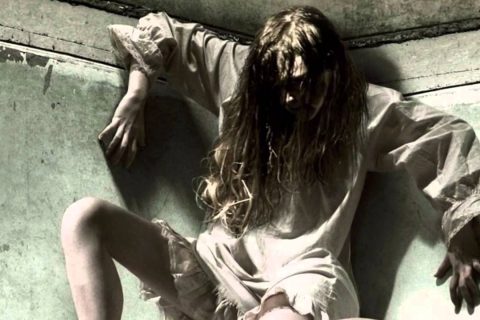
In 1632, the abbess reported to the bishop of Poitiers that some nuns in the convent had begun to exhibit unusual behavior: violent convulsions, incomprehensible screams, and a feeling of oppression. The nuns described visions of demons, some of whom took the form of attractive men.
The phenomenon intensified rapidly: the nuns claimed to be possessed by seven demons, including Baal, Asmodeus, and Leviathan. Their words were often accompanied by gestures of a sexual nature, descriptions of “diabolical couples,” and requests for sacrifices. The case attracted the attention of Jean de Laubardemont, sent by the king to investigate possible heretical practices.
The rejection of Urbain Grandier
Urbain Grandier was a charismatic and highly influential priest in Loudun from 1617, known for his persuasive sermons and his ability to win the trust of the village women, so much so that he was appointed canon of Saint-Pierre Cathedral in 1630. His libertine behavior and relationships with local girls fueled envy and suspicion, so he was reported to the bishop of Poitiers, who sentenced him to penance and expulsion, a sentence later overturned by the archbishop of Bordeaux. His opposition to the central authorities manifested itself when he opposed Baron De Laubardemont, who had been commissioned by Cardinal Richelieu to demolish some fortifications in Loudun.
But the factor that sparked the crisis of demonic possession was his refusal to accept the spiritual guidance offered to him by the superior of the Ursulines, Jeanne des Anges. This episode, seemingly marginal, proved crucial in triggering the series of events that would lead to the downfall of the charismatic parish priest.
Jeanne des Anges, an ambitious figure deeply convinced of her spiritual mission, had developed a strong influence over the nuns of the convent. Her personality, characterized by a mixture of devotion and determination, led her to consider Urbain Grandier as a soul to be won over to the cause of the faith.
Grandier, however, known for his independence of spirit and charisma, refused to submit to Jeanne des Anges’ spiritual guidance, considering it perhaps an undue interference in his priestly life. This refusal was perceived by Jeanne des Anges as a personal offense and, according to some interpretations, triggered deep frustration in her.
The superior, convinced that she was acting for the good of the Church and Grandier himself, began to see the parish priest as a man under demonic influence. The tension between the two turned into a veritable spiritual struggle, in which Jeanne des Anges became convinced that she had been entrusted with a divine mission: to free Grandier from the demon that possessed him.
The mother superior, confident in her influence over the nuns, began to spread the belief that Grandier was responsible for unleashing the demons in the convent. The nuns, influenced by the charismatic figure of Jeanne des Anges, began to show the first symptoms of possession, blaming Grandier for having bewitched them. This mechanism of collective suggestion, fueled by the tension between Grandier and Jeanne des Anges, created a climate of growing hysteria in the convent, which spread rapidly, involving other nuns and attracting the attention of ecclesiastical and civil authorities.
The accusations
In 1633, the nuns began to point the finger at Grandier, accusing him of bringing demons into the convent. They claimed that he had made a pact with the devil, thus practicing witchcraft, and that he had used his influence to cast a curse on the nuns, leading them into temptation. Some of them also reported unwanted sexual advances by the priest.
Despite the intensity of their statements, the testimonies often proved to be inconsistent and variable: some described Grandier as a “fallen angel,” while others portrayed him as a “lustful monster.” The lack of concrete evidence turned the case into a matter more related to the perception and credibility of the parties involved than to actual evidence of guilt.
The public exorcism
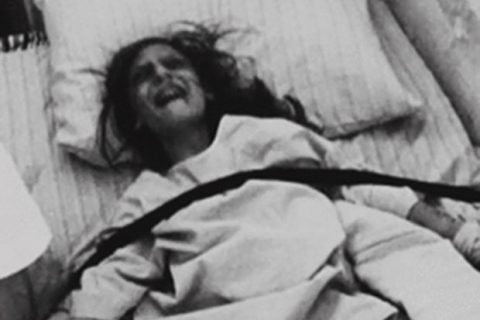
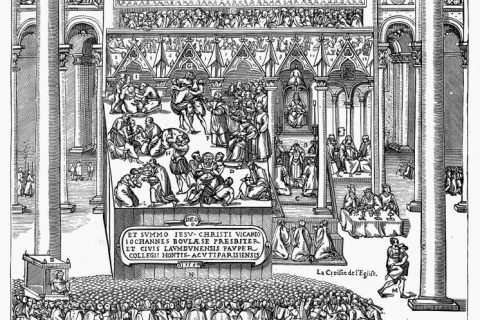
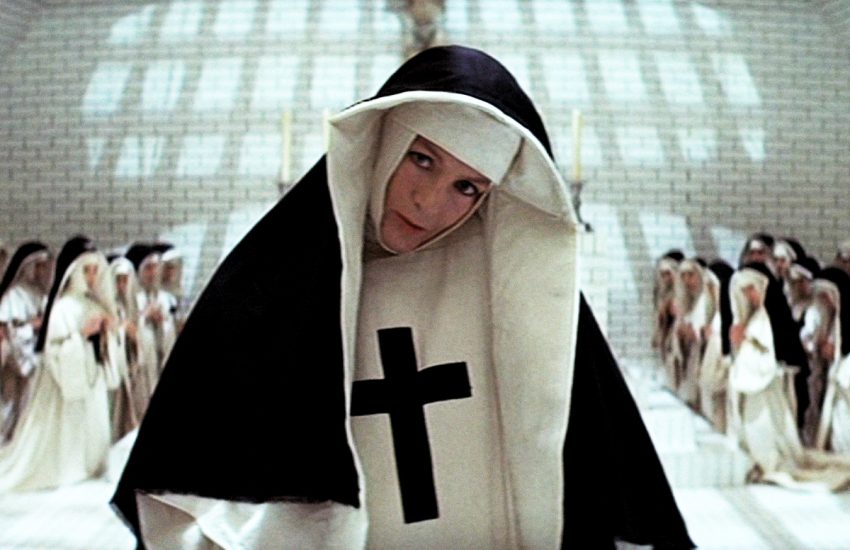
In 1633, by order of the royal commissioner Jean de Laubardemont, the town of Loudun was the scene of a series of public exorcisms that took place in the local cathedral. The rites were entrusted to a team of particularly experienced clergymen: the Franciscan friar Lactance, the Jesuit Surin, and the Capuchin friar Tranquille. The scene was impressive: the nuns, tied to sturdy wooden chairs to prevent violent movements, were brought before the altar and, under the eyes of an audience composed of citizens, civil authorities, and high prelates, began to scream, writhe, and, according to some contemporary accounts, levitate for brief moments. The atmosphere was charged with tension: the singing of the faithful, the incense that enveloped the nave, and the Latin words of the Rituale Romanum mingled with the cries of the “possessed,” creating a spectacle that further fueled the climate of panic and religious fervor throughout the region.
The Trial of the Devils of Loudun
The trial of Urbain Grandier began in 1634 under the presidency of Jean de Laubardemont and was characterized by an inquisitorial approach: the court accepted as decisive evidence the testimonies of the nuns gathered during the exorcisms, systematically rejecting the arguments of the defense and ignoring the total absence of material evidence. Subsequently, some of the nuns recanted their accusations, claiming that they had been manipulated by their superior, Jeanne des Anges.
The exorcisms, entrusted to Father Barre, revealed that the spirit possessing the mother superior was Astaroth, who had entered her on the day Grandier offered her roses. Seven other demons joined him, as the abbot used to visit the convent at night “by passing through walls.” After numerous unsuccessful rituals, in 1632 the bishop of Bordeaux ordered the exorcisms to be suspended. Grandier, irritated, publicly attacked Cardinal Richelieu, who again accused him of witchcraft and put him on trial.
He was arrested in 1634 while the nuns, in the throes of possession, repeated his name. Grandier then offered to conduct the exorcisms himself, but during the ritual in the church of Saint-Croix, the possessed women attacked him, scratching and biting him, a scene considered decisive proof. A nun named Giovanna testified that Satan himself had declared the existence of a pact with Grandier, promising him fame and the power to sexually enslave women.
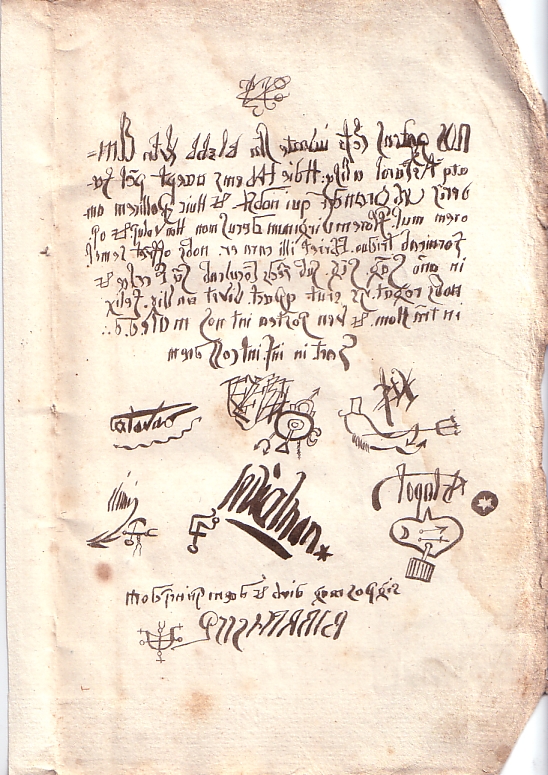
An alleged “pactum diaboli,” a sheet of paper signed by Asmodeus and Leviathan, was found and used to support this accusation. The court, influenced by political pressure from Richelieu, convicted Grandier of witchcraft and sodomy on August 18, 1634.
He was tortured and, in front of a crowd of about 6,000 people in the market square of Loudun, burned at the stake, ending with a tragic display of power a story in which religion, politics, and fear had intertwined in a lethal way.
After the conviction
After the conviction and execution of Urbain Grandier, the ecclesiastical authorities of Loudun entrusted the case to the Jesuits, who continued the exorcisms for almost two years; the nuns of the Ursuline convent, in particular the mother superior Jeanne des Anges, continued to experience convulsions, visions, and screams until 1637. After the last demon left the mother superior’s body, the names “Mary” and “Joseph” miraculously appeared on her arm.
Some historians believe that the crisis was partly fueled by local rivalries between Grandier’s family and his detractors, as well as by growing tension between secular and ecclesiastical power.
A witch hunt typical of its time?
The Loudun case shares many characteristics with the witch hunts of the time: the use of testimonies of possession, the persecution of a high-profile individual, and political exploitation. However, the media coverage (press, travelogues) makes it a unique case.
Psychological theories
Some scholars have hypothesized that the nuns suffered from mass hysteria, a phenomenon well documented in religious contexts where emotional repression is strong. The presence of motor symptoms (convulsions, levitation) and verbal symptoms (screaming in unknown languages) is consistent with the so-called Tourette’s syndrome or with the effect of group suggestion.
The role of sexuality
Accusations of sodomy and demonic sexual practices have led historians to view the case as a reflection of gender tensions. The Church, in the context of the Counter-Reformation, promoted an ideal of absolute chastity; the nuns, forced to take a vow of celibacy, may have internalized unresolved conflicts, manifesting them as demonic possession.
Influence in pop culture
- Literature: Aldous Huxley wrote The Devils of Loudun (1952), an essay that mixes historical facts and psychological interpretation.
- Cinema: Ken Russell’s film The Devils (1971), based on Huxley’s book, became a cult classic for its raw portrayal of religion and power.
- Theater: Bernard St. John’s play Les Diables de Loudun (1972) has been staged in numerous European theaters.
- Music: The industrial metal band Rotting Christ dedicated a track titled “Loudun” to their 2016 album.
These works demonstrate how the case continues to serve as a metaphor for the struggle between authority and individuality, between faith and reason.
What can we learn from the Devils of Loudun?
The case of the Devils of Loudun shows how collective fear, politics, and religion can intertwine to generate a vortex of accusations and violence. Three fundamental lessons emerge from the story. First, the need for rigorous evidence: Grandier’s trial highlights how the lack of concrete evidence can be replaced by emotional testimony and social pressure. Secondly, the danger of the instrumentalization of power: both civil and ecclesiastical authorities exploited the case to consolidate their authority, to the detriment of justice. Finally, the importance of a psychological perspective: understanding phenomena of possession as possible manifestations of mental disorders or group dynamics can help us to better manage contemporary crises, from pandemics to fake news. Today, more than three centuries later, Loudun remains a symbol of intolerance but also of dark fascination, a reminder that history is full of shadows, but also of lights that can illuminate our consciences.
Recommended bibliography
- Huxley, Aldous – The Devils of Loudun (1952).
- Michelet, Jules – La Sorcière (1863).
- Levack, Brian P. – The Witch-Hunt in Early Modern Europe (1987).
- Caciola, Barbara – Witchcraft and the Social Order (1994).
- Carmona, René – Les Possédées de Loudun (1979).
If you enjoyed this article, please leave a comment, share your thoughts on cases of witchcraft throughout history, and share on your social media!