 Posted by
 Thirty years ago, in a farmhouse on the outskirts of Polistena, Calabria, one of the darkest and most incomprehensible chapters in Italian crime history unfolded. A story intertwining ignorance, superstition, cultural poverty, and criminal manipulation, culminating in the barbaric murder of a fifty-day-old baby girl, Maria Ilenia Politanò. More than just a simple murder, this case is a dramatic study of social pathology and collective deviance.
Arrival at the emergency room
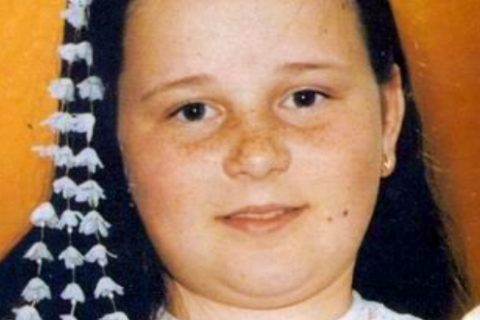
Reggio Calabria, September 12, 1994. A man, Vincenzo Fortini, bursts into the hospital emergency room clutching a bundle that is too small and silent. It is Maria Ilenia. The doctors, accustomed to all kinds of emergencies, are shocked by the sight of that battered little body. Signs of unspeakable violence, damaged internal organs, a face marked by unheard-of cruelty. The child is no longer breathing. The bewilderment turns to horror: who could have committed such an atrocity against such a defenseless being? The chilling answer was not far away.
Collective madness in the house of delirium
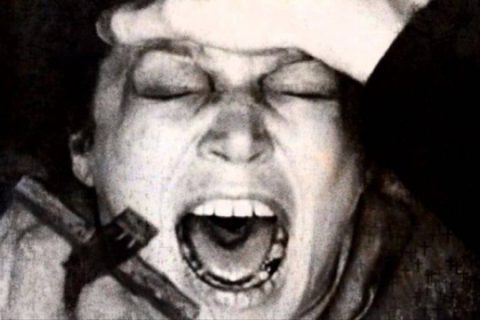
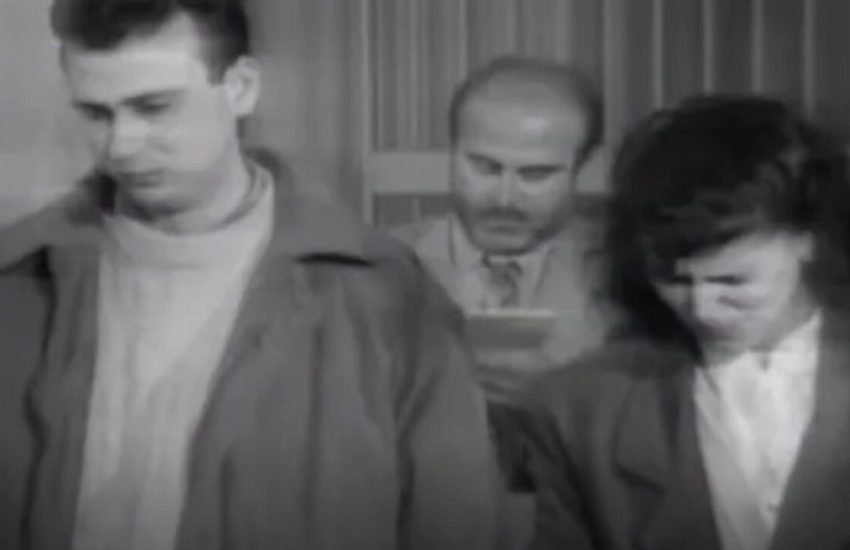
While the paramedics fought in vain to save the little girl’s life, in a house on Via Esperia in Polistena, nine people waited in anguished silence. They were her family members. When the police arrived, the young parents, Laura Lumicisi and Michele Politanò, confessed without hesitation. They admitted that they, together with the grandmother and other uncles, had witnessed the torture of their daughter. The little girl had been stripped naked, laid on a table, beaten, shaken, and abused. The reason? The delusional belief that she was possessed by the devil.
At the center of the insane ritual was the same uncle who had taken her to the hospital, Vincenzo Fortini, a baker from Genzano who, in a mystical frenzy, had appointed himself exorcist. During a night vigil, he had convinced the group that evil dwelled within the newborn. The violence inflicted—including the gruesome act of blowing into her private parts to “extract” the evil—was accompanied by a chorus of prayers from the onlookers, who were totally subservient to the distorted charisma of the “holy man.”
A year of manipulation and fraud
To understand how an entire family could have fallen into such an abyss, we need to take a step back a year. The context is fundamental: a family of humble farm laborers, rooted in a rural culture where popular religiosity and superstition coexist closely.
After the death of their grandfather from cancer and following strange noises in the house, the vulnerable and frightened family sought help. Through relatives in Rome, they came into contact with Francesca Giananti, known as ‘Maga Yvette’. For 25 million lire (an exorbitant sum for them, later reduced to 3 million), the woman moved into their home for a fortnight, staging séances and hypnosis sessions, feeding their fears instead of calming them. Before leaving, she committed the most nefarious act: she “invested” three members of the family, Fortini, Laura’s brother Mimmo (who believed himself to be St. Francis) and a cousin (who believed herself to be the Virgin Mary), with alleged exorcistic powers.
This was the spark that ignited a collective mystical delirium. Fortini, believing himself to be guided by Padre Pio, began to see the devil everywhere, in a paranoid crescendo that found its scapegoat in the most defenseless member of the family: Maria Ilenia. Her crying as a newborn, physiological and normal, became in his distorted mind the definitive proof of possession.
Poverty, ignorance, and secondary victimization
From an analytical point of view, the Politanò case is a veritable textbook of sociology and criminology, as it emblematically embodies the dynamics of socioeconomic vulnerability, secondary victimization, and collective suggestion. The family represents an extreme case of marginalization, where material deprivation directly translated into a poverty of cultural and critical tools, leaving them completely unable to defend themselves from manipulation.
Already deeply affected by grief and ancestral fears, the Lumicisi-Politanò couple suffered dramatic secondary victimization: first defrauded by the sorceress Ivette, who cynically exploited their credulity, and then brainwashed by the charismatic and distorted figure of Vincenzo Fortini, they were thus dragged into a degrading spiral that transformed them from victims into perpetrators. This process was made possible by a perfect echo chamber represented by the micro-context of the family, where the mystical illusions of each member, some who believed they embodied Padre Pio, others St. Francis, and others the Virgin Mary, fed and reinforced each other, destroying any remaining capacity for critical judgment and cementing the group in a cohesive paranoia.
Finally, this collective delirium took root and proliferated in a specific cultural macro-context, namely rural Calabria at the time, a humus in which ancient pagan beliefs and a popular Catholicism with strongly folkloric traits provided fertile ground for such distortions, in a social context where the boundary between faith and superstition was, for many, dangerously blurred and vague.
The judicial epilogue: (in)complete justice?
The trial ended with a verdict that left many questions unanswered.
Vincenzo Fortini was sentenced to 18 years in prison as the sole perpetrator.
Francesca Giananti, the sorceress, was sentenced to only 1 year and 8 months for fraud, a sentence that did not fully recognize her role as the deus ex machina of the tragedy.
All the other family members, including the parents, were acquitted. The reason? “Ignorance, superstition, and desperation.” The judge considered them incapable of understanding and willing, totally subjugated by the collective madness driven by Fortini.
An acquittal that is still debated today, raising a profound ethical and legal dilemma: to what extent can manipulation and ignorance negate parental responsibility to protect one’s offspring?
The demon of ignorance
Maria Ilenia Politanò was not possessed by the devil. The real demon was a lethal mix of ignorance, cultural poverty, and criminal manipulation. A demon that dwells not in the underworld, but in the darkest corners of society, where lack of education and opportunity creates vulnerable victims.
Her story is a timeless warning. A call to reason, scientific culture, and education as the only true antidotes to obscurantism. It reminds us that the greatest evil often does not take the form of a supernatural being, but the earthly and tragic form of human irrationality.
Maria Ilenia would have discovered the world with her own eyes. Instead, her world ended that day in September, in a farmhouse where the light of reason had long since been extinguished, replaced by the darkness of the blindest superstition.