

 Posted by
Skinning was a torture method used in various civilizations throughout history and it involves removing a portion of skin from a human being while still alive (although in some cases it is carried out post-mortem) and trying to keep intact the portion removed.
The dermatologist Ernst G. Jung says that the main causes of death due to skinning are: shock, hypothermia, bleeding and infections. The death of the subject is not immediate, but it could take anything from a few hours to a few days.
Skinning throughout history
Jung wrote an essay on the subject called “Kleine Kulturgeschichte der Haut” (“A Short Cultural History of the Skin”), which describes the practice during the Assyrian civilization. In the Assyrian tradition we find references to flaying in inscriptions and royal edicts.
From these sources we learned that skinning could start to be done at various points of the body, such as the ankle, the leg or the back.
Even in the history of China skinning had been used by various emperors; in particular, in 1396, the Hongwu Emperor ordered 5,000 women to be flayed.
Throughout history we have other examples of skinning as a method of execution. In 1303 the treasurer of Westminster Abbey was robbed while carrying a large sum of money belonging to the king. Some monks were investigated for the crime, and three of them were found guilty and flayed alive. Their skins were then nailed to three doors as a warning.
A curiosity: for centuries it was said that the remains of that skin could still be seen on a door of Westminster Abbey. In 2005 researchers analysed them and found that it was cowhide, not human skin.
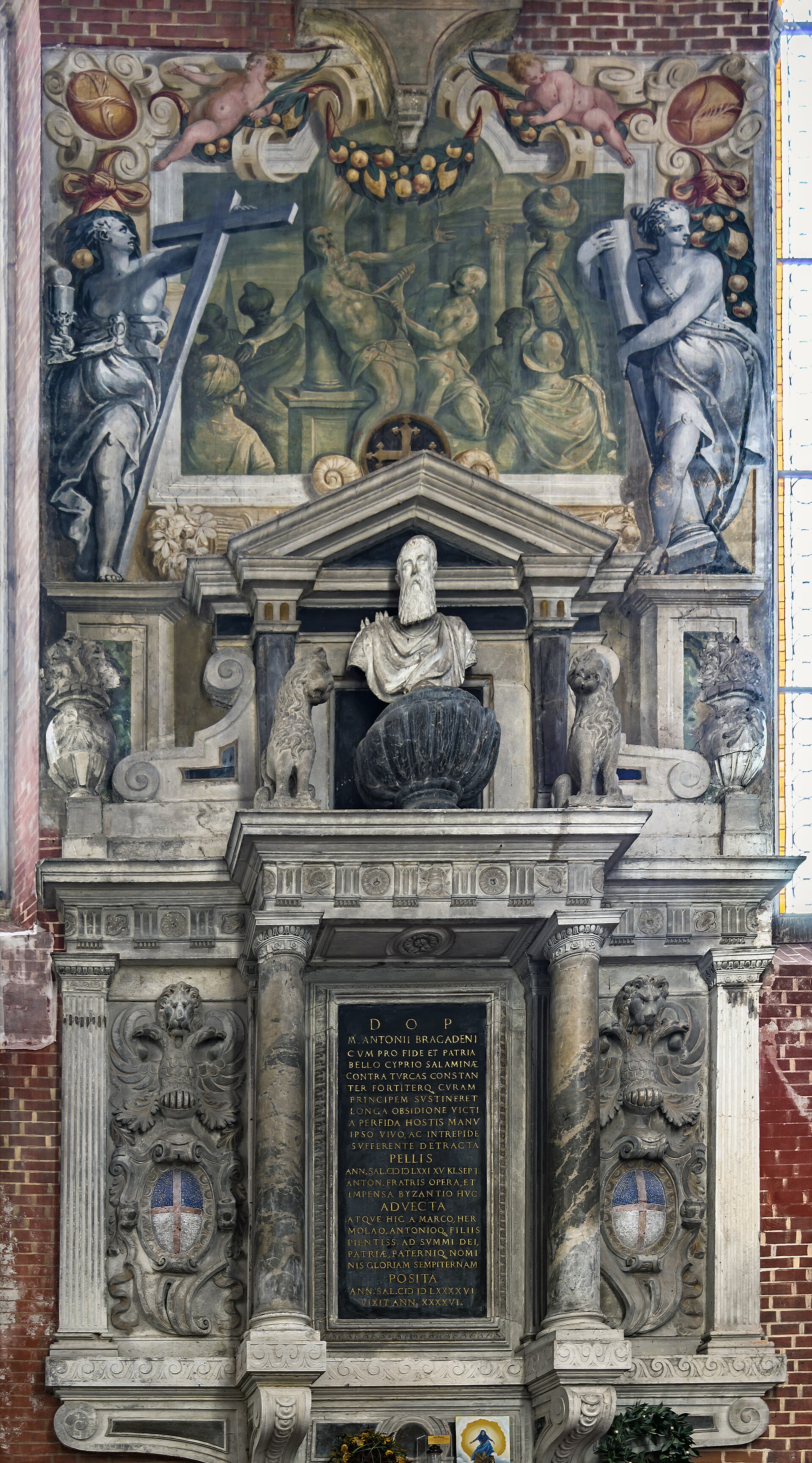
One of the most famous cases, on the other hand, involves an Italian. In 1571 Marcantonio Bragadin, the Venetian commander of the fortress of Famagusta in Cyprus, surrendered to the Ottomans after a long siege in exchange for a promise that his life would be spared. The promise was not kept: Bragadin was tortured for days and then flayed alive. His skin, stuffed with straw, was paraded as a trophy and then sent to Constantinople. Years later it was stolen and brought back to Venice, where it still is today, kept in an urn in his funerary monument in the Basilica of Santi Giovanni e Paolo.
Want to know more about ancient methods of torture? Check this out: Rack, Rope and Red-hot Pincers: A History of Torture and Its Instruments. A book written by a retired Warder of the Tower of London who studied in detail torture methods.
Post-mortem Flaying
In some cases the skinning is conducted after death, as a sign of contempt toward the body or for religious reasons.
The latter is the case of the Aztecs who flayed the victims used for human sacrifices.
This practice was also used in Europe during the Middle Ages, on the corpses of those who were considered traitors.
Removing the scalp is also considered a type of skinning; this treatment was inflicted on the corpses of enemies by several civilizations.
Flaying in art
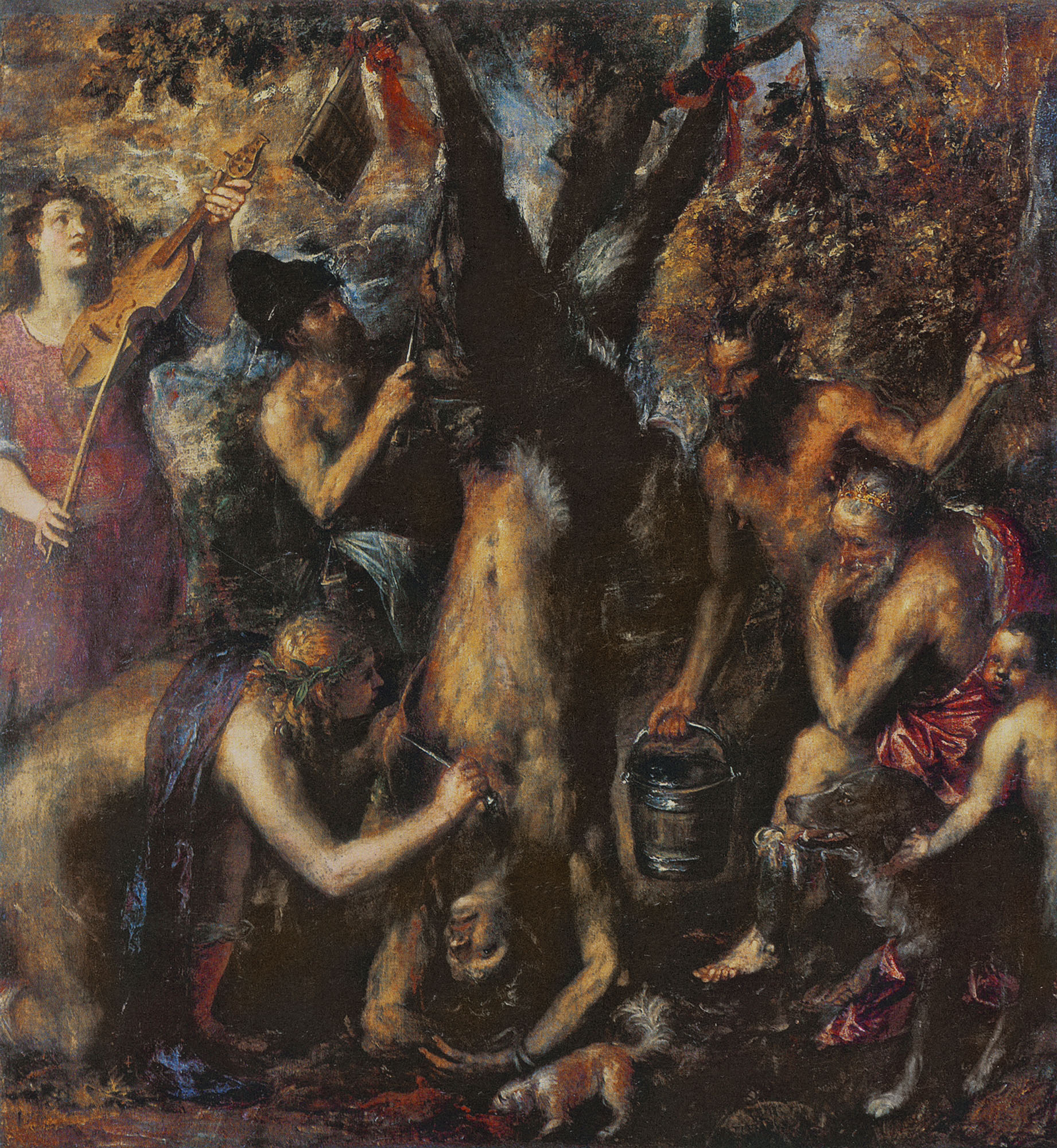
Flaying has also left a deep mark on art and myth. In Greek mythology the satyr Marsyas dared to challenge the god Apollo to a musical contest, lost, and as punishment was hung from a tree and flayed alive. Titian painted the scene in one of his last masterpieces, now in the Czech Republic.
According to Christian tradition the apostle Bartholomew was also flayed alive, which is why he is depicted holding a knife and his own skin draped over his arm. In the Last Judgement in the Sistine Chapel, Michelangelo painted him exactly like that, and in the sagging skin the saint holds, many scholars see a self-portrait of Michelangelo himself.


